








A Hindu wedding is probably the most significant and happiest occasion in someone's life. It is not only a ceremony but also a religious and cultural path that unites two individuals and their families along with them. All the rituals, all the mantras, all the ceremonies mean something extremely special. In this blog, we will explore Hindu wedding rituals step by step, the forms of marriage in the Vedas, and the customs that make a Hindu wedding an experience to cherish.
Understanding a Hindu Wedding
A Hindu wedding is a sacred ceremony that is governed by centuries-old traditions and religious scriptures. Unlike modern civil marriage, a Hindu wedding ceremony centers on spiritual bond, family bond, and societal responsibilities. Hindu marriage is a samskara, or religious rite of passage, which allows the couple to move on to the grihastha ashram, the householder phase of life.
The aim of a Hindu wedding is not just to unite two people on an emotional and physical level but to coordinate their lives spiritually as well. Every move, ritual, and vow is designed to enhance the bonding of the couple and make them live in accordance with dharma (righteousness).
Types of Marriage in Vedas
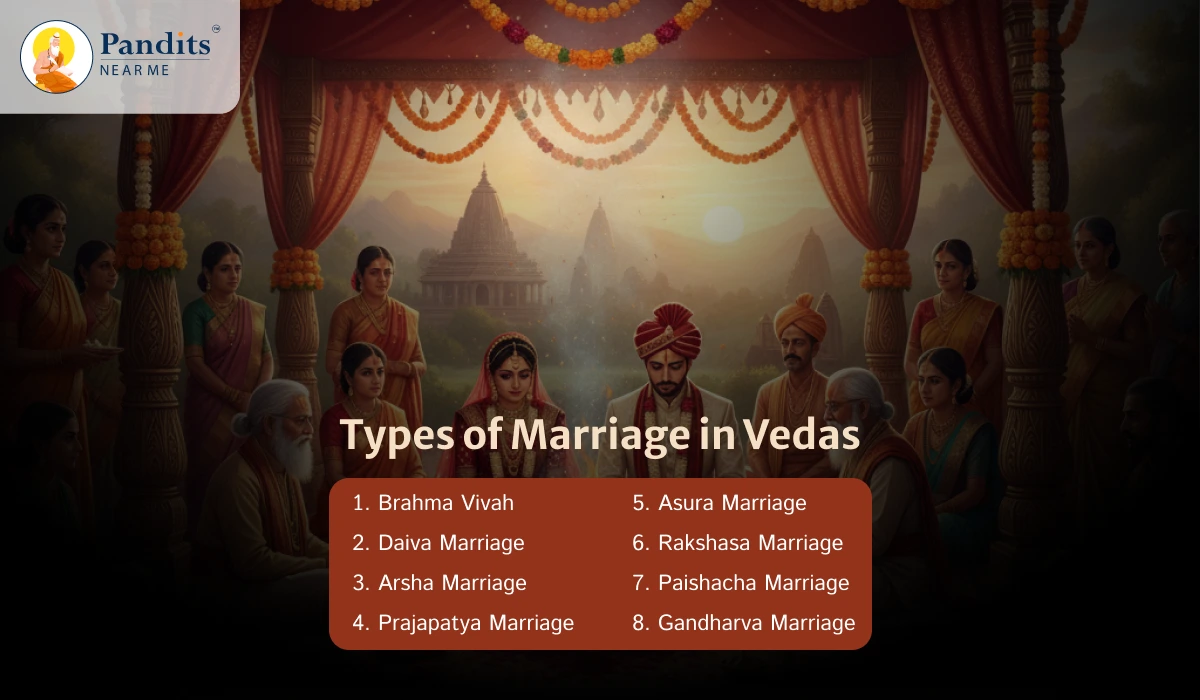
The old Vedic scriptures describe eight types of marriage, not all of which are still practiced. It becomes easy to appreciate the different types of Hindu marriage ceremony after knowing them. The most significant ones are:
1. Brahma Vivah – It is the most holy form of Hindu wedding. In Brahma Vivah, the bride's family introduces their daughter to an educated and virtuous groom without the expectation of dowry. It emphasizes duty, virtue, and spiritual values.
2. Daiva Marriage – The bride is married off in a Daiva marriage to a priest or to one who is performing an austere ritual, typically in exchange for religious services. It focuses more on devotion and reverence for religious duties.
3. Arsha Marriage – The bride is exchanged for symbolic gifts like a cow or bull in this instance. It represents respect between families as opposed to worldly things.
4. Prajapatya Marriage – This is where mutual consent between the groom and bride exists, along with a promise to fulfill their roles as wife and husband.
5. Asura Marriage – This is less practiced and involves the bride price being given by the groom to the bride's family. In the past, it was less respected than Brahma Vivah.
6. Rakshasa Marriage – A form of marriage where bride snatching is done forcefully by the bridegroom. This is obsolete and unethical today.
7. Paishacha Marriage – Seduction or adulterous means, strictly not allowed in Hindu dharma.
8. Gandharva Marriage – Love marriage and mutual agreement, similar to modern romantic marriages, most of the time without parental permission.
Brahma Vivah and Daiva marriage are the most revered and the most practiced ones among these during modern Hindu wedding ceremonies.
Pre-Wedding Customs of a Hindu Wedding
Before the principal ritual, several Hindu wedding steps prepare the bride and bridegroom spiritually and psychologically. These customs are intended to bless the couple and cleanse their energies.
1. Engagement (Sagai/Nischay Tamulam)
The Hindu wedding ceremonies typically begin with the engagement, where the wedding is officially announced. Families select auspicious dates (muhurta) with the help of a priest or an astrologer. There is an exchange of rings or symbolic gifts representing loyalty.
2. Ganesh Puja
The wedding ceremonies start with a Ganesh Puja to remove obstacles and attain a smooth and successful wedding ceremony. Lord Ganesha, the remover of obstacles, is worshipped first in all Hindu weddings.
3. Haldi Ceremony
Turmeric paste is applied to the bride and groom in the Haldi Ceremony. It is claimed to purify their bodies and shine bright with a warm glow. It is also a celebration where families come together on the night of the wedding day.
4. Mehendi and Sangeet
Even more cultural than traditionally Vedic , Mehendi and Sangeet ceremonies are now an obligatory part of Hindu wedding culture. The hands and feet of the bride are decorated with intricate henna designs, and families celebrate with song, dance, and music.
Also read this article : What Happens in a Vedic Marriage? A Complete Guide
The Most Significant Hindu Wedding Ritual
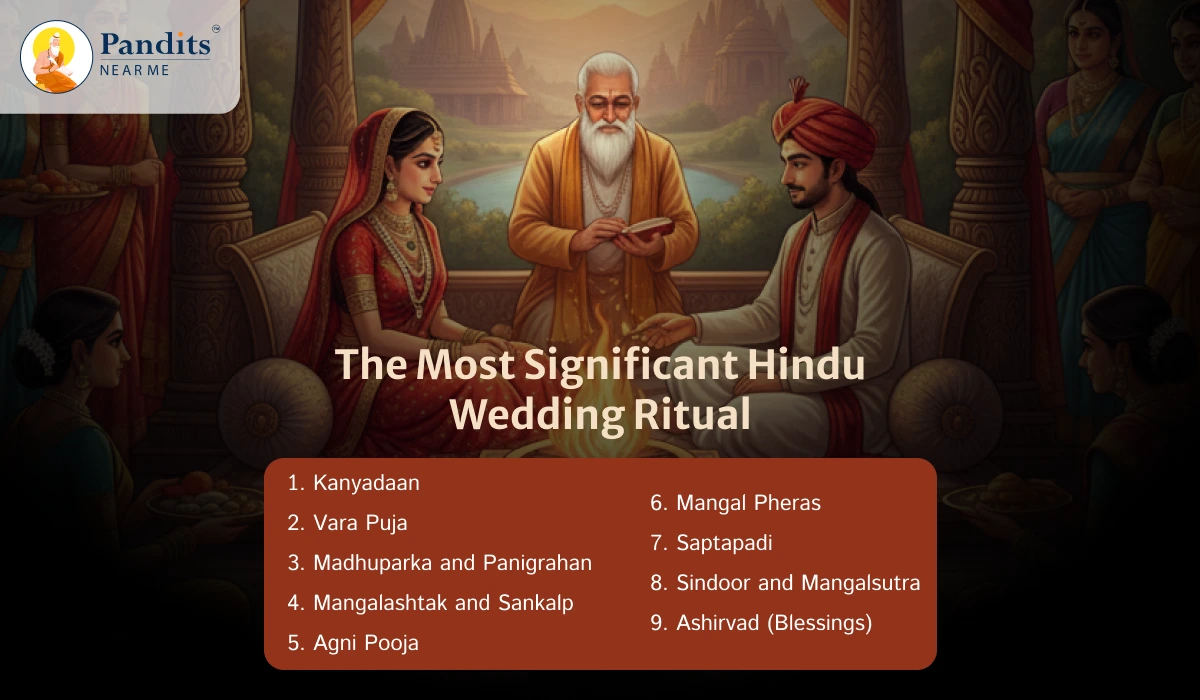
The Hindu wedding ritual is the most spiritual part of the ceremony, performed in the surroundings of a sacred fire (Agni). The fire is a witness to the divine and symbolizes purity, energy, and the presence of the Gods and Goddesses.
The most significant Hindu wedding procedures during the ceremony are as follows:
1. Kanyadaan
One of the most significant Hindu wedding rituals, step by step, is Kanyadaan, where the bride's father gives away his daughter to the bridegroom. It signifies faith, duty, and the sacred gift of a daughter, which is a blessing of Goddess Lakshmi.
2. Vara Puja
The bridegroom is introduced into the bride's family through a ceremony called Vara Puja. He is welcomed as an incarnation of Lord Vishnu, and his feet are washed for respect and purification.
3. Madhuparka and Panigrahan
In Madhuparka, the bridegroom is offered a mixture of honey, yogurt, and ghee to symbolize sweetness and prosperity in marital life. Then, in Panigrahan, the bridegroom takes the hand of the bride, promising to maintain his status as her companion in dharma, love, and life.
4. Mangalashtak and Sankalp
Blessings are called for through sacred chants known as Mangalashtak, and the bride and bridegroom make serious vows (Sankalp) to live in peace, love, and devotion.
5. Agni Pooja
The holy fire is lit by the priest in search of blessings from the Gods. Ahuti (offerings) are made, signifying devotion and surrender to God's guidance.
6. Mangal Pheras
The bride and groom take seven rounds around the sacred fire in the Mangal Pheras, promising each time food, good health, prosperity, bliss, and eternal friendship. These are the steps of Hindu weddings that tie the two souls spiritually.
7. Saptapadi
The Saptapadi, or seven steps, is when the bride and groom take seven symbolic steps together. All seven steps symbolize shared responsibilities like faithfulness, feeding, protection, and respect for one another. Once they have taken the seventh step, their wedding is complete and sacred.
8. Sindoor and Mangalsutra
The groom puts sindoor on the bride's forehead and fastens the mangalsutra around her neck, signifying her as a wedded lady. This is one of the most traditional and iconic Hindu wedding rituals.
9. Ashirvad (Blessings)
Last but not least, the couple takes blessings from seniors by touching their feet, praying for a long, successful, and peaceful life together.
Post-Wedding Traditions
Even though the major Hindu marriage ceremony has been completed, certain rituals add cultural and emotional depth to a Hindu wedding.
1. Griha Pravesh
The bride, on entering her new house, is welcomed with Griha Pravesh, in which she gently pushes a bowl of rice inside the house with her right foot. This represents good fortune and prosperity entering the household.
2. Satyanarayan Puja
Some couples perform a Satyanarayan Puja in appreciation for the gods having granted a successful wedding ceremony and seeking blessings for a life of bliss to come.
Modern Adaptations of Hindu Wedding Traditions
While the majority of Hindu wedding rituals step by step are centuries old, modern weddings adapt to blend traditional and new customs. Destination weddings, short ceremonies, and personalized celebrations are gaining popularity, but the basic essence of the Hindu wedding traditions, spiritual union, family bonding, and cultural reverence, does not change.
Why Hindu Weddings Matter
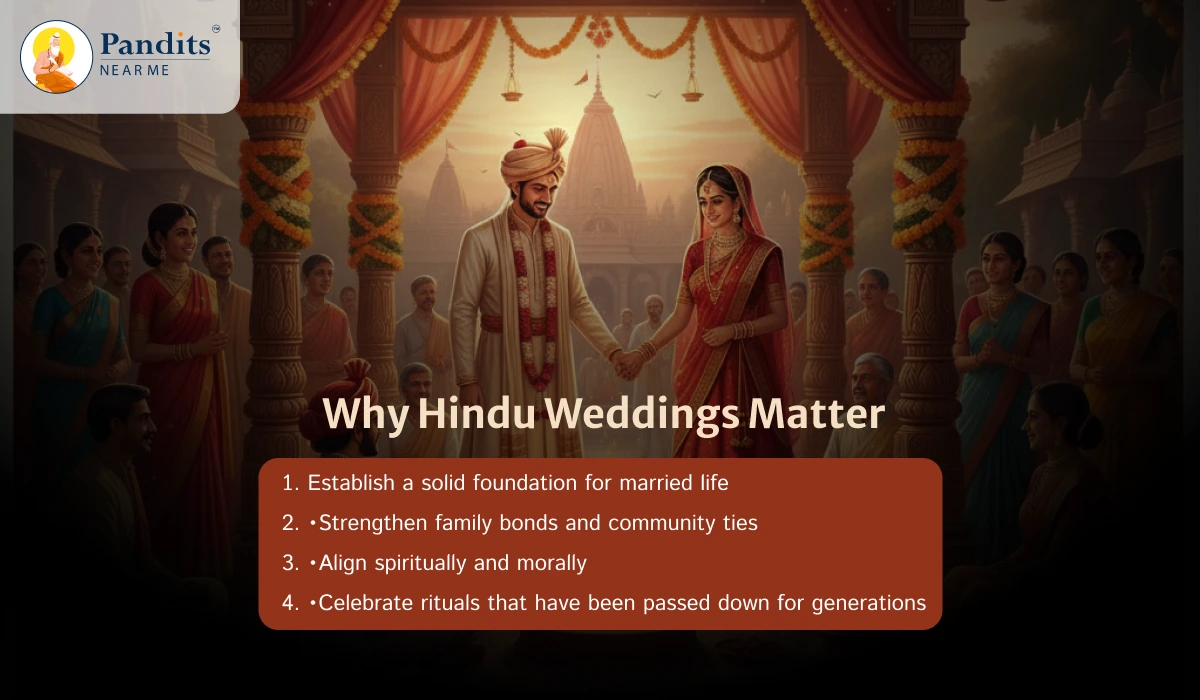
A Hindu wedding is not just a social event; it is a religious and cultural milestone. The rituals help couples:
- Establish a solid foundation for married life
- Strengthen family bonds and community ties
- Align spiritually and morally
- Celebrate rituals that have been passed down for generations
Knowledge of the types of marriage in Vedas and performing the rituals correctly assures that the couple embarks on their life together with blessings, purity, and harmony.
Conclusion
A Hindu marriage is a holy bond that is rich in rituals, cultural complexity, and spiritual significance. From Brahma Vivah to Daiva marriage, all the types of marriage in Vedas are replete with meaning, and values like faith, virtue, and sacred bonding take precedence. Through Hindu wedding steps, followed by rituals, not only do couples follow ancient customs, but also create a foundation for a life full of love, admiration, and common spirituality.
Here at Pandits Near Me, our expert Vedic pandits conduct all Hindu wedding ceremonies with honesty, spirituality, and precision, with each ritual and mantra being recited according to ancient texts. Begin your new beginning under divine blessing and transform your Hindu wedding traditions into an actual celebration of love, duty, and long-lasting togetherness.
Book your Vedic pandit today with Pandits Near Me and bless your wedding with a spiritual touch.