




As the monsoon gives way to autumn, millions of devotees across India prepare to welcome Shardiya Navratri 2026 with faith, devotion, and vibrant celebrations. Dedicated to the nine forms of Goddess Durga, this nine-day festival is a time for spiritual reflection, sacred rituals, fasting, and community festivities. Families decorate their homes, temples come alive with prayers, and devotees seek the blessings of the Divine Mother for strength, prosperity, and protection.
If you’re searching for the Navratri 2026 date October, planning Ghatasthapana at home, or looking to perform a Navchandi Yagna, knowing the correct rituals and auspicious timings is essential. This guide brings together everything you need for Shardiya Navratri 2026.
Shardiya Navratri Starting and Ending Dates
If you’re wondering when Navratri starts in 2026, Sharadiya Navratri begins on Sunday, October 11, 2026, with the auspicious Ghatasthapana (Kalash Sthapana) on Pratipada and concludes on Tuesday, October 20, 2026, with the celebration of Vijayadashami (Dussehra).
Over these nine sacred days, devotees worship the nine forms of Goddess Durga through prayers, fasting, and special rituals. Along with following the daily puja schedule, many devotees also wear the traditional Navratri colours 2026 associated with each day as a symbol of devotion and positivity.
| Date | Navratri Colours 2026 | Festival | Tithi |
| 11th Oct, 2026 | Orange | Ghatasthapana | Pratipada |
| 12th Oct, 2026 | White | Maa Brahmacharini Puja | Dwitiya |
| 13th Oct, 2026 | Red | Maa Chandraghanta Puja | Tritiya |
| 14th Oct, 2026 | Royal Blue | Vinayaka Chaturthi | Chaturthi |
| 15th Oct, 2026 | Yellow | Maa Kushmanda Puja | Panchami |
| 16th Oct, 2026 | Green | Maa Skandamata Puja | Shashthi |
| 17th Oct, 2026 | Grey | Maa Katyayani Puja | Saptami |
| 18th Oct, 2026 | Purple | Maa Kalaratri Puja/ Maa Mahagauri Puja | Ashtami |
| 19th Oct, 2026 | Peacock Green | Maa Siddhidatri Puja | Navami |
| 20th Oct, 2026 | No Official Color | Vijayadashami (Dussehra) | Dashami |
Also read this blog: Chandi Havan: 9 Signs You Need This Powerful Ritual
Kalash Sthapana 2026 for Sharadiya Navaratri
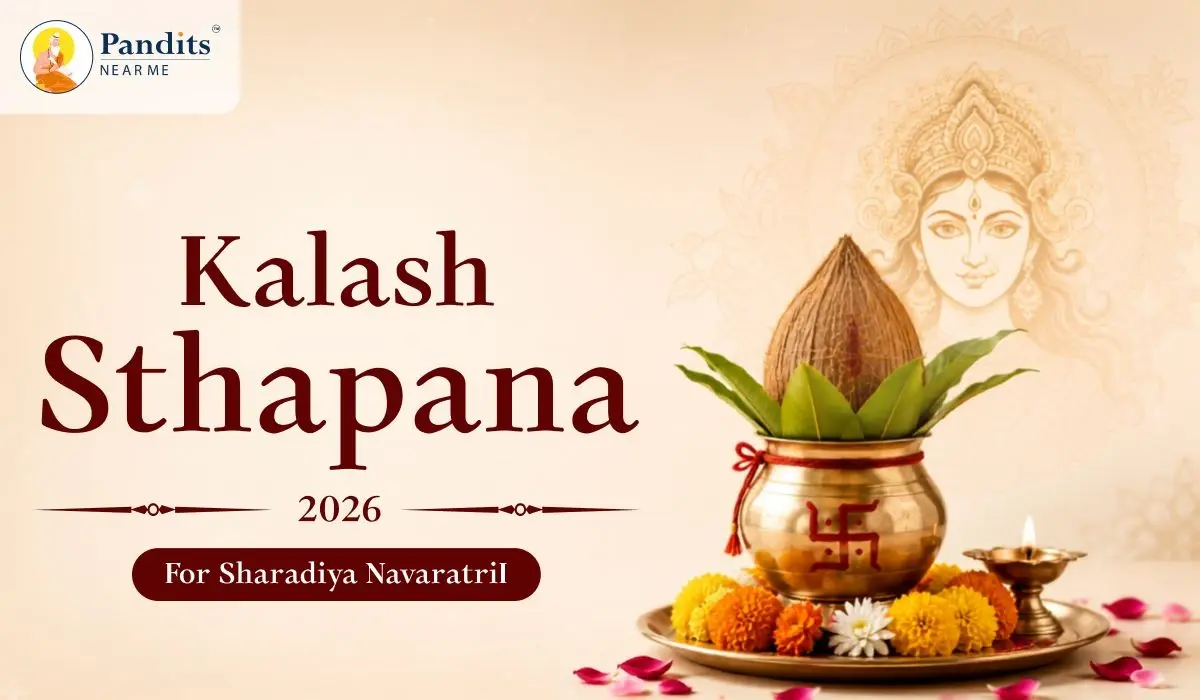
Kalash Sthapana 2026 will be observed on Sunday, 11th October 2026, marking the auspicious beginning of Sharadiya Navratri. Also known as Ghatasthapana, this sacred ritual invokes Goddess Durga into the Kalash and signifies the start of nine days of devotion. According to Hindu tradition, the ritual should be performed during the prescribed Ghatasthapana Muhurat on Pratipada Trithi, preferably in the morning while avoiding inauspicious timings.
If you’re planning Ghatasthapana at home, follow these traditional steps:
Clean the puja room or the area where the Kalash will be placed.
Spread clean soil in a shallow earthen or metal container.
Sow barley seeds evenly in the soil as a symbol of prosperity and new beginnings.
Fill a copper, brass, or earthen Kalash with clean water and add betel nut, turmeric, a coin, and a few grains of rice.
Place five mango leaves at the mouth of the Kalash.
Wrap a coconut in a red cloth or tie a sacred thread (mouli) around it and place it on top of the Kalash.
Position the Kalash on or beside the container with the sown barley.
Install an idol or image of Goddess Durga near the Kalash and offer flowers, kumkum, akshat, fruits, and sweets.
Light a diya and incense sticks, then chant Durga mantras or recite the Durga Saptashati puja to invoke the blessings of the Goddess.
Continue offering daily prayers throughout Navratri puja, and conclude the worship by performing Visarjan on Navami or Vijayadashami.
Why is Sharadiya Navratri Celebrated?
Shardiya Navratri 2026 is celebrated to commemorate the victory of Goddess Durga over the powerful buffalo demon Mahishasura, symbolizing the triumph of good over evil. According to Hindu mythology, Mahishasura was granted a boon that made him nearly invincible, allowing him to defeat the gods and create chaos across the three worlds. Unable to overcome him, the gods combined their divine energies to create Goddess Durga, the embodiment of Shakti (divine feminine power).
Armed with celestial weapons gifted by the gods and riding a lion, Goddess Durga fought Mahishasura in a fierce battle that lasted for nine days and nine nights. On the tenth day, she finally defeated and killed the demon, restoring peace and righteousness. This day is celebrated as Vijayadashami (Dussehra), marking the victory of dharma over adharma.
The nine days of Sharadiya Navratri are dedicated to worshipping the nine forms of Goddess Durga, with devotees seeking her blessings for strength, courage, wisdom, and protection. The festival serves as a reminder that truth, righteousness, and divine power ultimately prevail over arrogance and evil.
Significance of Each Day of Sharadiya Navratri
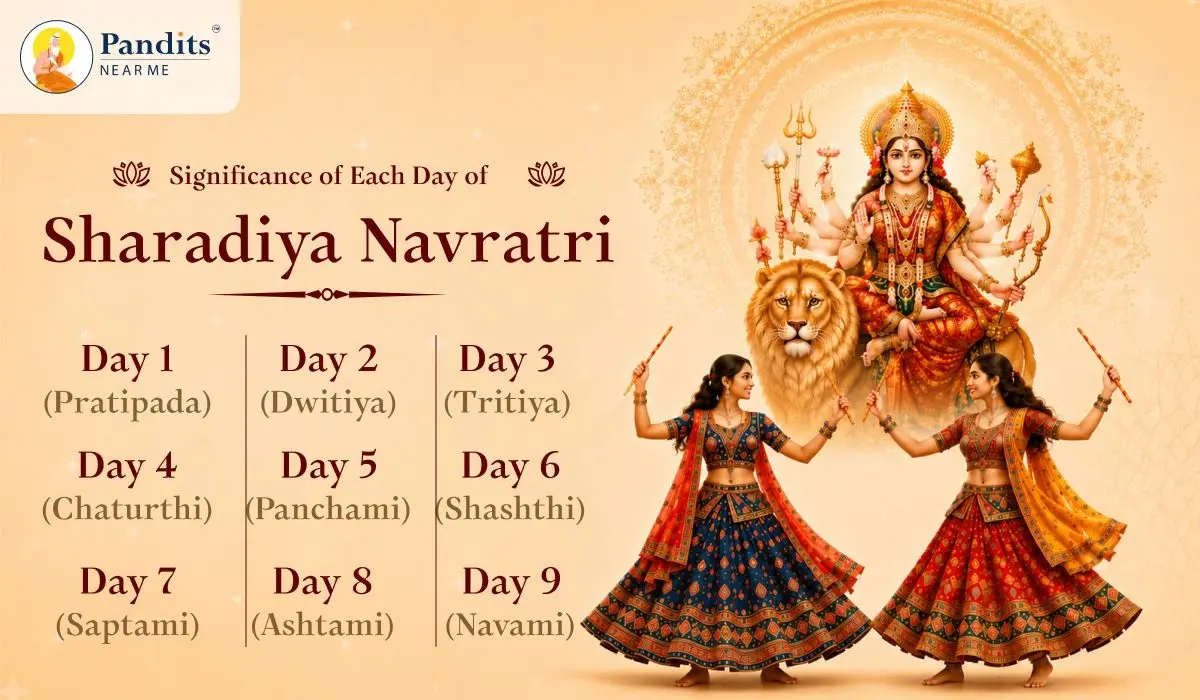
Day 1 (Pratipada): Maa Shailputri
The first day of Shardiya Navratri 2026 is dedicated to Maa Shailputri, the daughter of the Himalayas and the first form of Goddess Durga. Riding Nandi and holding a trident and lotus, she symbolizes strength, purity, and new beginnings. Devotees worship her to seek stability, courage, and a prosperous start to the Navratri celebrations.
Day 2 (Dwitiya): Maa Brahmacharini
The second day is devoted to Maa Brahmacharini, the goddess of penance, devotion, and self-discipline. Carrying a rosary and Kamandalu, she represents determination and spiritual wisdom. Worshipping her is believed to bring peace, patience, and inner strength.
Day 3 (Tritiya): Maa Chandrapghanta
The third day honors Maa Chandraghanta, recognized by the crescent moon on her forehead. Riding a tiger and armed with divine weapons, she protects devotees from evil and blesses them with courage, peace, and prosperity.
Day 4 (Chaturthi): Maa Kushmanda
The fourth day is dedicated to Maa Kushmanda, the creator of the universe, who is believed to have brought light into the cosmos with her divine smile. She is depicted with eight arms carrying various weapons, a rosary, a pot of nectar, and other sacred objects. Devotees worship her for good health, strength, wealth, and vitality.
Day 5 (Panchami): Maa Skandamata
The fifth day celebrates Maa Skandamata, the mother of Lord Kartikeya. She is depicted carrying her son in her lap while seated on a lotus and riding a lion. She symbolizes unconditional motherly love, compassion, and protection. Worshipping her is believed to bless devotees with happiness, prosperity, and wisdom.
Day 6 (Shashthi): Maa Katyayani
The sixth day celebrates Maa Katyayani, the fierce warrior form of Goddess Durga who was born to destroy the demon Mahishasura. She rides a lion and carries a sword and lotus while blessing her devotees with courage and protection. She is worshipped for strength, success, and the removal of obstacles.
Day 7 (Saptami): Maa Kalaratri
The seventh day is dedicated to Maa Kalaratri, the fiercest form of Goddess Durga, who destroys fear, ignorance, and negative energies. Although her appearance is terrifying, she is known as the protector of her devotees. She rides a donkey and carries divine weapons while granting fearlessness and courage.
Day 8 (Ashtami): Maa Mahagauri
The eighth day honors Maa Mahagauri, who represents purity, peace, forgiveness, and serenity. According to legend, Lord Shiva blessed her with a radiant complexion after her intense penance. She is depicted riding a bull and holding a trident and damaru while blessing devotees with happiness and prosperity.
Day 9 (Navami): Maa Siddhidatri
The final day of Shardiya Navratri 2026 is dedicated to Maa Siddhidatri, the goddess who grants spiritual powers, wisdom, and fulfillment. Seated on a lotus or lion, she carries a chakra, conch, lotus, and mace, symbolizing divine perfection. Devotees worship her to attain spiritual growth, success, and liberation.
Book Pandit for Navratri Puja 2026
Celebrate Shardiya Navratri 2026 with complete peace of mind by choosing verified Vedic pandits through Pandits Near Me. Whether you’re performing Ghatasthapana, daily Durga Puja, Chandi Path, Navchandi Yagna, Kanya Puja, or Navami Havan, our experienced pandits guide you through every ritual according to authentic Vedic traditions.
Using the book pandit for Navratri Puja 2026 option, you can schedule a qualified pandit at your preferred date and time, receive complete puja guidance, and enjoy transparent pricing with hassle-free booking. We also offer Book Online Puja services for NRI Families, allowing devotees across the world to participate in sacred Navratri rituals through live online ceremonies conducted by verified pandits from India.
Book your Navratri Puja today and seek the divine blessings of Maa Durga for health, prosperity, happiness, and protection for your family.