








Indian marriage is not just a union of two people; it's a Godly union that blends religion, tradition, and family values. While most folks think of Hindu weddings and Vedic Marriage as the same thing, there is a subtle but profound difference between the two.
A Hindu Wedding today might as well have an integration of ancient traditions and contemporary practices. A Vedic Marriage, on the other hand, strictly follows spiritual rituals as laid out in the Vedas ancient Hindu scriptures.
Here, we will learn why these two are different, explain their wedding ceremonies, and welcome you to the deeper symbolism behind each divine ritual.
What is a Hindu Wedding?
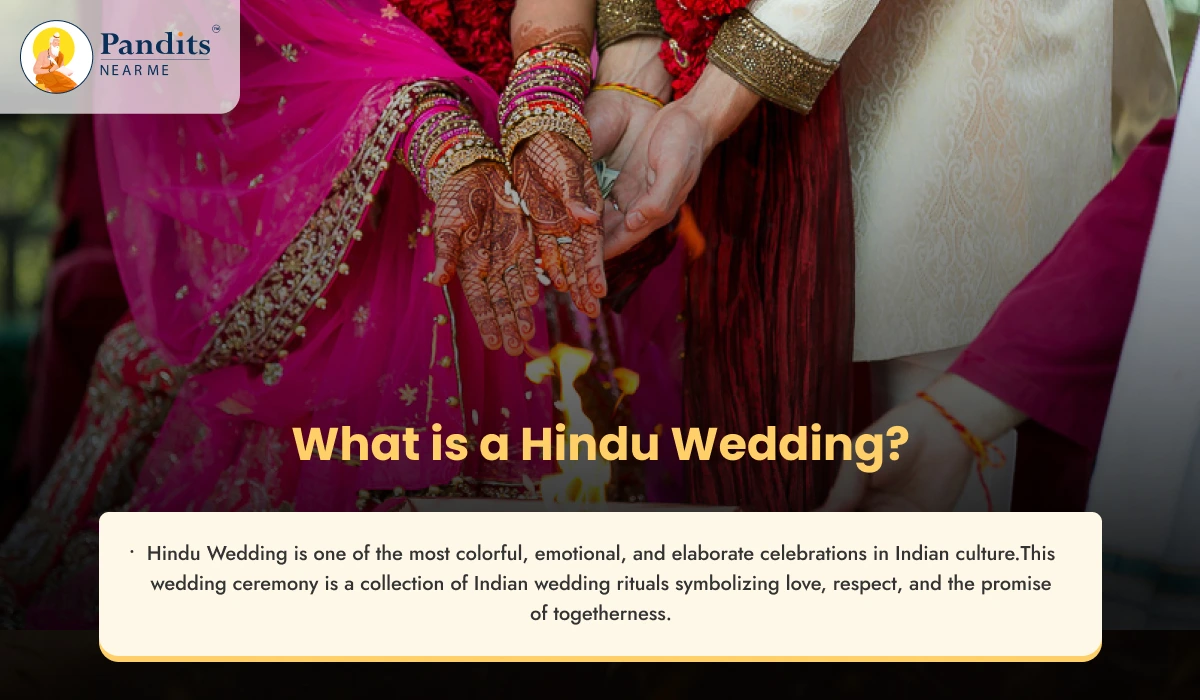
Hindu Wedding is one of the most colorful, emotional, and elaborate celebrations in Indian culture.This wedding ceremony is a collection of Indian wedding rituals symbolizing love, respect, and the promise of togetherness.
While the Vedas are the source of inspiration for most of these customs, modern Hindu weddings also carry local and cultural influences.
Classic Hindu Wedding is extended over several days, from the Roka Ceremony to the Reception. Each ceremony is symbolic as well as spiritually meaningful.
What is a Vedic Wedding?
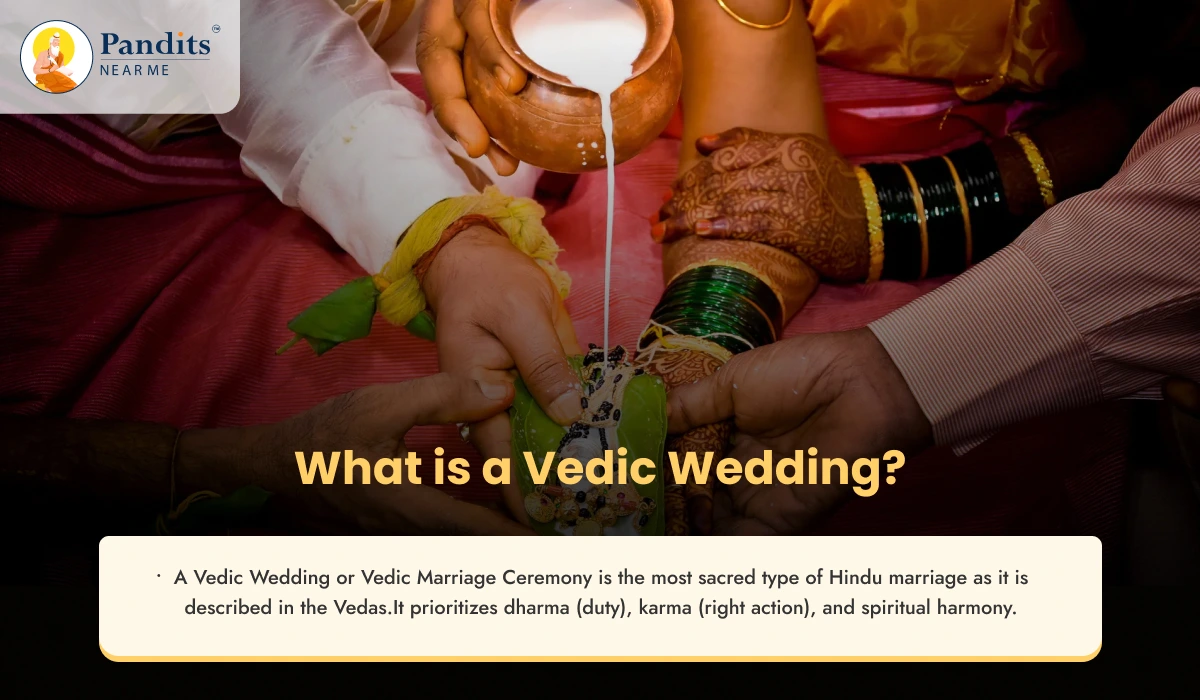
A Vedic Wedding or Vedic Marriage Ceremony is the most sacred type of Hindu marriage as it is described in the Vedas.It prioritizes dharma (duty), karma (right action), and spiritual harmony.
The main purpose of a Vedic Wedding Ceremony is not just to wed two individuals but to establish a sacred union that supports spiritual progress and family responsibilities.
Every wedding ceremony performed in a Vedic Marriage is spiritually significant from the Ganesh Sthapana in Marriage to the Saptapadi (seven blessed steps in a circle of sacred fire).
Key Differences Between Hindu Wedding and Vedic Marriage
Aspect | Hindu Wedding | Vedic Marriage |
Purpose | Social and emotional union of two families | Spiritual and sacred union based on dharma |
Ritual Basis | Mix of traditional and regional rituals | Purely based on Vedic scriptures |
Duration | Often lasts for 3–7 days | Usually completed in one day |
Focus | Celebrations, customs, family bonding | Mantras, fire rituals, and spiritual vows |
Modern Influence | Includes modern trends like the ring ceremony and reception | Unchanged since ancient times |
Deity Invocation | Multiple deities, depending on family tradition | Agni (fire god) and Vishnu are the primary witnesses |
Core Philosophy | Balances tradition and modernity | Strict adherence to Vedic principles |
Important Hindu Wedding Customs
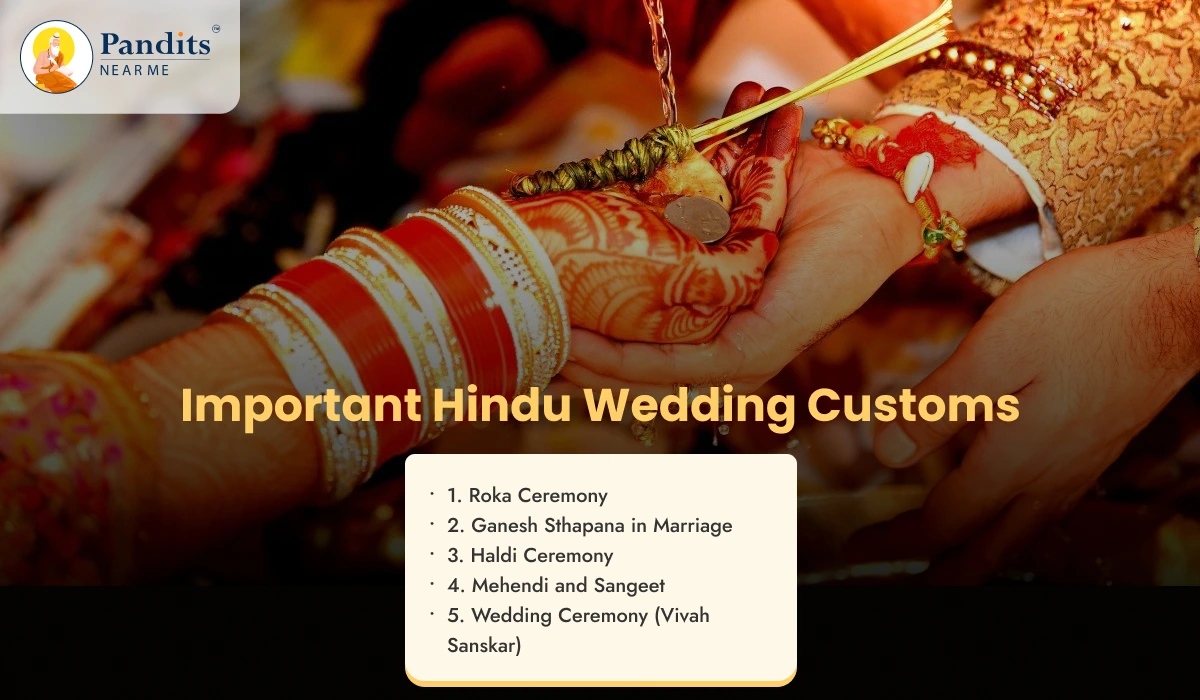
A Hindu wedding is a blend of merriment, devotion, and celebration. Each step of the ritual process has meaning. Here's a brief overview of the key Indian wedding rituals:
1. Roka Ceremony
Roka Ceremony is the official beginning of wedding celebrations. It is the initial formal meeting of the two families and signals that the couple has accepted their vows to each other. It entails the exchange of gifts, sweets, and blessings and is a joyous family occasion.
2. Ganesh Sthapana in Marriage
Before any wedding ceremony, Ganesh Sthapana in Marriage is performed. Lord Ganesha, the obstacle remover, is invoked to bless the couple and make the whole process smooth.
This tradition is of crucial importance as it provides a good start to all the future marriage rituals.
3. Haldi Ceremony
Turmeric paste is used on the bride and groom for purification, representing beauty, good health, and good luck.
4. Mehendi and Sangeet
These wedding ceremonies are filled with music, dance, and celebration. Henna (mehendi) is applied to the bride's hands, and family members gather at the Sangeet to celebrate together.
5. Wedding Ceremony (Vivah Sanskar)
The main wedding ceremony is performed around the sacred fire (Agni). The pandit chants Vedic mantras while the bride and groom share vows, garlands (Jaimala), and take the Saptapadi: seven steps together, representing their seven vows.
Also read this article : 8 Types of Hindu Marriage and Their Significance
Core Vedic Marriage Rituals
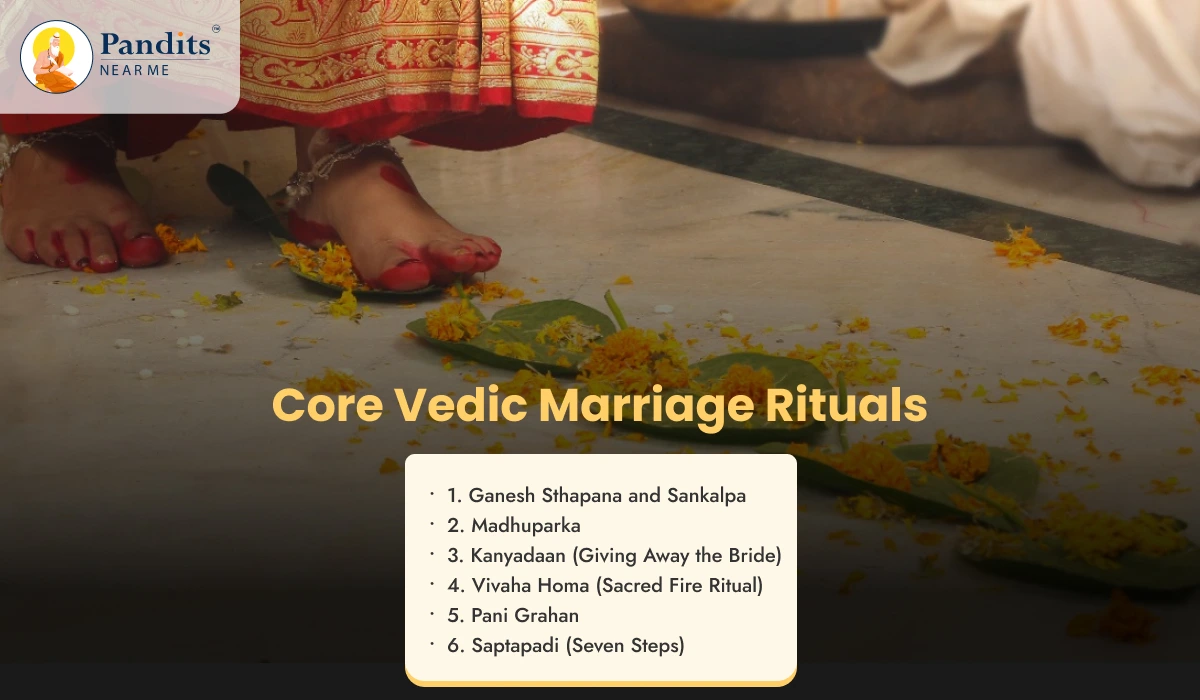
A Vedic Wedding Ceremony is based on purity and spirituality. Every movement, every mantra carries a holy significance that connects human life to cosmic order (Rta). Let us learn the most important Vedic Marriage rituals:
1. Ganesh Sthapana and Sankalpa
Just like modern Hindu weddings, a Vedic Marriage begins with Ganesh Sthapana in Marriage. The priest invites Lord Ganesha for his blessings on the couple.
Second comes Sankalpa, where the groom declares his readiness to take a wife on the grounds of dharma, and the bride's family accepts.
2. Madhuparka
Honey, curd, and ghee welcome the bridegroom, symbolizing purity and sweetness in the marital life. It is a sign of respect and hospitality towards the bridegroom.
3. Kanyadaan (Giving Away the Bride)
This is the most sacred wedding ritual in the Vedic Wedding Ceremony. The bride's father prepares his daughter and gives her to the groom, presenting her happiness and well-being into his care. This act symbolizes responsibility and trust.
4. Vivaha Homa (Sacred Fire Ritual)
A small fire is lit to invoke Agni Devta, the fire god, as a witness to the union from God. The pair both put grains and ghee into the fire while uttering Vedic mantras.
This part of the Vedic Marriage represents the sanctity of commitment and purification of the soul.
5. Pani Grahan
Here, the groom holds the bride's hand as he utters mantras of friendship, respect, and love. This is a symbolic representation of their union in the presence of Agni.
6. Saptapadi (Seven Steps)
The crowning glory of a Vedic Wedding Ceremony, the Saptapadi is seven circumsailing walks around the sacred fire. Each step is a commitment of friendship, strength, and shared growth.
After this, the marriage is now legally binding and complete in the Vedic tradition.
Philosophy of Vedic Marriage
Vedic Marriage philosophy is based on the fact that marriage is a divine duty (Dharma) and not an agreement that is a part of society. It is the beginning of Grihastha Ashrama, the second stage of life, during which citizens pay their dues to society, family, and spirituality.
Compared to the weddings of today that can be about more décor and appearance, the Vedic Wedding Ceremony reminds one of the higher purpose of life, living in harmony with values and divine order.
The Modern Hindu Wedding: The Melange of Tradition and Trend
In the modern era, Hindu Wedding ceremonies blend the traditional with the modern in perfect harmony. While the fundamental wedding customs like Kanyadaan and Saptapadi remain the same, individualistic touches like theme decorations, destination weddings, and designer outfits are what most couples add to them.
However, the foundation of love, faith, and family bond remains the same. That is what makes Indian wedding traditions timeless; they evolve without losing their sacred character.
Which One to Choose – Hindu Wedding or Vedic Marriage?
It's your choice.
If you want to celebrate your wedding in grandeur, family traditions, and local culture, then a Hindu Wedding is perfect.
But if you wish a spiritually based and scripture-oriented marriage that focuses on Vedic philosophy, then a Vedic Marriage will make you closer to the divine power.
The majority of modern-day couples today blend both having a Vedic Wedding Ceremony as well as the traditional Indian wedding ceremonies, balancing religion and merriment.
Conclusion
Both Hindu Wedding and Vedic Marriage celebrate the sacred union of two hearts. The only difference is in their orientation one favors cultural celebration, while the other favors spiritual depth.
While a Hindu Wedding honors India's vibrant traditions in one's wedding celebrations, a Vedic Marriage reflects the importance of purity and divine intention.
If you’re planning a traditional Hindu Wedding or wish to experience the purity of a Vedic Marriage, let Pandits Near Me guide you. Our certified and experienced Vedic pandits perform every wedding ceremony and marriage ritual with devotion and authenticity from Ganesh Sthapana in Marriage to Saptapadi.