




There is a unique magic in the autumn air across India. The nation gears up for one of its most spirited and cheering celebrations that is Dussehra 2026. Also, it is commonly called as Vijayadashami and is more than just a local fiesta. It is the majestic completion of nine devoted nights giving a tribute to righteousness and setting a universal reminder that light will always triumph no matter how long the darkness stays.
Dussehra means ‘the 10th day of victory’. If you are planning to see spectacular cultural programs, start your vital project or watch the glorious firework show, this is the best auspicious day. Dussehra 2026 welcomes a fresh wave of opportunity and hope.
What is Vijayadashami?
The word ‘Vijayadashami’ is derived from the combination of two Sanskrit words namely, ‘Vijay’ and ‘Dashami’. Here, ‘Vijay’ refers to victory or triumph while ‘Dashami’ means the ‘tenth lunar day’. When put together, they form the word ‘Vijayadashami’ which ultimately means ‘Victory on the 10th lunar day’.
Popularly known in the local Indian language, this festival is mainly denoted as ‘Dussehra’. It originated from ‘Dasha-Hara’ which means elimination of the demon with ten heads. This holy day pays homage to enormous mythological conquests that depict the similar eternal fact: the triumph of good over evil.
Also read this blog: Durga Puja 2026: Complete Festival Calendar & Rituals
When is Dussehra? Dussehra 2026 Dates and Timing
Schedule your holidays smartly according to the upcoming festivities and rituals, we got you covered with everything from this year Dussehra date and the propitious intervals.
The Dussehra 2026 start date and end date matches with the Hindu lunar calendar for the month of Ashwin. The wider festive window begins from Sharad Navratri reaching to Vijayadashami and running through Maha Navmi, in between them.
The following table will clear this picture.
| Occasion | Day & Date |
| Sharad Navratri Starts | 11th October, 2026, Sunday |
| Maha Navami | 19th October, 2026, Monday |
| Vijayadashami or Dussehra | 20th October, 2026, Tuesday |
Prosperous Puja Time On Dussehra
Soak yourself with the blessings of divine energy on this auspicious day. Take note of the core timings on 20th October, 2026:
Dussehra Puja Time : From 01:14 PM to 03:30 PM
Start Time Of Dashami: 20th October, 2026, at 12:50 PM
Shubh Muhurat: From 01:59 PM to 02:45 PM
End Time Of Dashami: 21st October, 2026, at 02:11 PM
Proper Puja Vidhi Of Dussehra
You can perform Puja at home also to connect with the Dussehra festival.
- Clean up the Puja space and wear fresh clothes to conduct Puja.
Sprinkle the holy water (Gangajal) in the Puja room for purification.
Keep the picture or idol of Shri Ram Darbar to worship.
Light incense sticks for good energy and a relaxing atmosphere.
Light a lamp (diya) before your idols to take a Sankalp.
Perform Shastra Puja (worship your tools & weapons).
Put the tilak of Aparajita (butterfly pea) flower for a new start.
Offer water, mantar jap, flower and naivedya.
Do Aarti with family members and give the Prasad to all.
Finish off Puja with some Charity to the needy as per your limits.
Vijayadashami History: Why is Vijayadashami Celebrated?
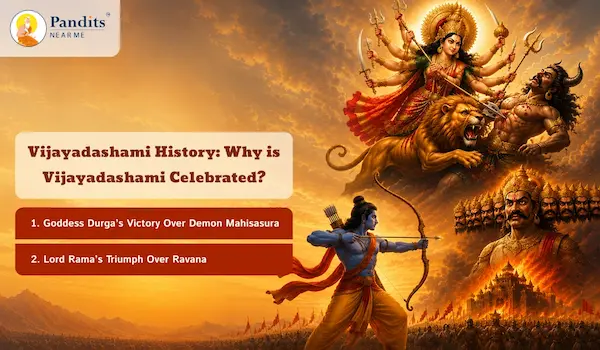
The bountiful heritage of Vijayadashami history roots from the two ancient Indian epic stories from the mythology:
Goddess Durga’s Victory Over Demon Mahisasura:
In East India, the Dasara Festival is celebrated to pay tribute to Goddess Durga Puja. The demon Mahisasur (with body type of a Buffalo) had petrified the absolute three worlds with menace. He played safe under the godsend blessing of being undefeatable by any man.
Hence, to conquer him, the gods created powerful Devi Durga with their shared energies. Goddess Durga had a nine nights long fight with Mahisasur. Ultimately, on the tenth day of fight, Mahisasur was absolutely defeated by the glorious, powerful and divine feminine power Shakti.
Lord Rama’s Triumph Over Ravana:
The most prevailing and widespread narrative for the Dussehra comes from the sacred epic Ramayana. The story revolves around the 10-day fierce war by Lord Rama along with his disciple Hanuman, brother Lakshmana and the large troops of Vanar Sena (Monkey army).
The war was fought against the King of Lanka, Ravana, as he cunningly abducted Goddess Sita. Hence, this renowned mythological war was against the good over evil and is still remembered since ages. Ultimately, on the 10th day of the fight, Lord Rama conquered and slayed Ravana. It depicts the collapse of arrogance, lust and ego.
Spiritual Significance of Dussehra (Vijayadashami)
Apart from the mythological importance, the essence of Dussehra holds a lot more meaning in the day to day routine and personal life of every human. In fact, all the ten heads of Ravana are individually linked to the ten character vices found in a corrupt being.
Dussehra also signifies to get rid of these faults to embark on the spiritual journey clean. The ten heads of Ravana symbolizes as follow:
Krodha (Anger)
Lobha (Greed)
Matsarya (Jealousy)
Amanavta (Inhumanity)
Aniti (Injustice)
Asatya (Deceit/False)
Ahankara (Ego)
Mada (Pride)
Moha (Attachment)
Kama (Lust)
Therefore, Dussehra is a yearly reminder to purify your soul and spirit, by getting rid of these ‘inner Ravana’ traits. It asks you to kill your bad habits, inferiority complex, laziness and negativity. One should clear their mind for proceeding on the path of personal growth.
How Dussehra Is Celebrated Across India?
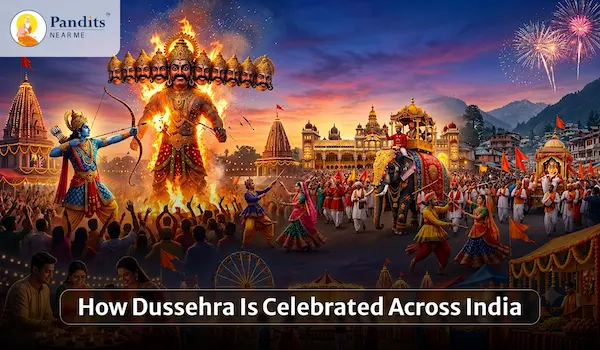
India is a diverse nation with a rich culture. The soul of the festivity remains the same in all corners of the country, but the celebrations may vary region-wise. Every state adds their own unique essence in the festivity.
1. West India: Garba Revelry & Ayudha Puja
Vijayadashami is preceded by the nine nights of Navratri and Dussehra falls on the 10th night after Navratri is over. In Maharashtra and Gujarat, the nine energetic nights are celebrated in full bloom in the form of Dandiya Raas and Garba.
On Vijayadashami, Marathis worship their work equipment, tools, vehicles and books under Ayudha Puja for expressing gratitude. Also, people share the Apta tree leaves with one another as ‘gold’ to wish prosperity for everyone.
2. East India: Durga Visarjan & Bijaya Dashami
In the East India states, mainly West Bengal, Odisha and Assam, Durga Puja is a grand celebration of nine nights of Navratri, where giant decorative pandals are set up of idol Goddess Durga. Bijaya Dashami is observed on the tenth day of Durga Puja as bidding the heartfelt celebratory farewell to Goddess Durga.
Usually, married women involve themselves in Sindoor Khela (putting red vermilion powder on each other for a thriving married life) in front of the Durga Visarjan (idol immersion) in water bodies. People greet each other with warm hugs by saying ‘Shubho Bijoya’ and offer sweets like Sondesh and Rosogulla.
3. North India: Effigy Burning & Ramlila
In North India, Dussehra is usually celebrated in the form of role plays, acts and dramas based on the life journey of Lord Rama. This dramatic enactment is popularly known as ‘Ramlila’. It is fondly performed and seen by huge masses in the states of Punjab and Uttar Pradesh and mainly in the national capital, New Delhi.
‘Ramlila’ is not a one day event, rather it happens continuously for ten nights from Vijayadashami. On the day of Dussehra, giant and vibrant effigies stuffed with fireworks of Ravana, his brother Kumbhakaran and son Meghnada are set ablaze by the theatre artist playing Lord Rama. Thousands of spectators come to the ground with full cheer.
4. South India: Golu Displays & Mysuru Dasara
In South India, the holy day takes on a grand royal hue mainly in the states of Tamil Nadu, Telangana, Karnataka and Andhra Pradesh. In fact, the Mysuru Dussehra celebration in Karnataka is very famous as the classic Mysore Palace gets lit up with over 1 lac bulbs.
Also, there is a majestic parade showcasing decorated elephants (Jumboo Savari) toting the deity Goddess Chamundeshwari. The houses all over South India prepare Golu or Bommala Koluvu- that are tiered and artful featuring wooden deities and dolls.
Book a Pandit for Dussehra Puja with Pandits Near Me
The sacred day of Dussehra or Vijayadashami holds magnificent importance in every hindu’s life. It is an auspicious day to start any new business venture, begin education of children, purchase any significant property, enter a new house, sign major contracts, launch new products or services, buy a new car, acquire a new skill, pick a hobby, learn any new language or music instrument, and many more.
In hindu tradition, any pious beginning is never complete without performing the sacred Puja. It is done with the help of experienced and knowledgeable Pandits or Saints only, as ordinary man is not aware of all rituals.
For these important events, we offer expert services from our platform Pandits Near Me. Here, you can contact any Pandit any time and anywhere around the world, both physically as well as digitally.