








If you practice Hinduism, you already know that it is very important to perform the last rite of a person through the antyeshti sanskar method. With 16 rituals from the time of birth of a person all the way till their death, Antyeshti kriya naturally takes place as the last rite. If you want to perform these rites properly, having the essential Antim Sanskar Samagri is very important.
Planning well in advance and having the basic knowledge about these rites allows you to handle the necessary items properly for the funeral ceremony. This in-depth guide contains the essential Antim Sanskar Samagri used for Hindu rituals after death, along with their significance.
Hindu Beliefs About Death
The Hindu beliefs are centered around reincarnation and karma. They believe that although the physical body dies, the soul of a person remains and continues on until it rests upon its true nature. A person will have many lifetimes, each one more and more closer to Brahma, the Hindu god.
After a person’s death, the hindu belief states that the physical body serves no purpose, and therefore does not need to be preserved. They choose to cremate because they believe it is the quickest way to release the soul so that it can reincarnate. While historically taking place on the Ganga River in India, nowadays, people cremate locally, and most funeral directors accommodate the Hindu death ceremony.
Key Objectives of Antim Sanskar
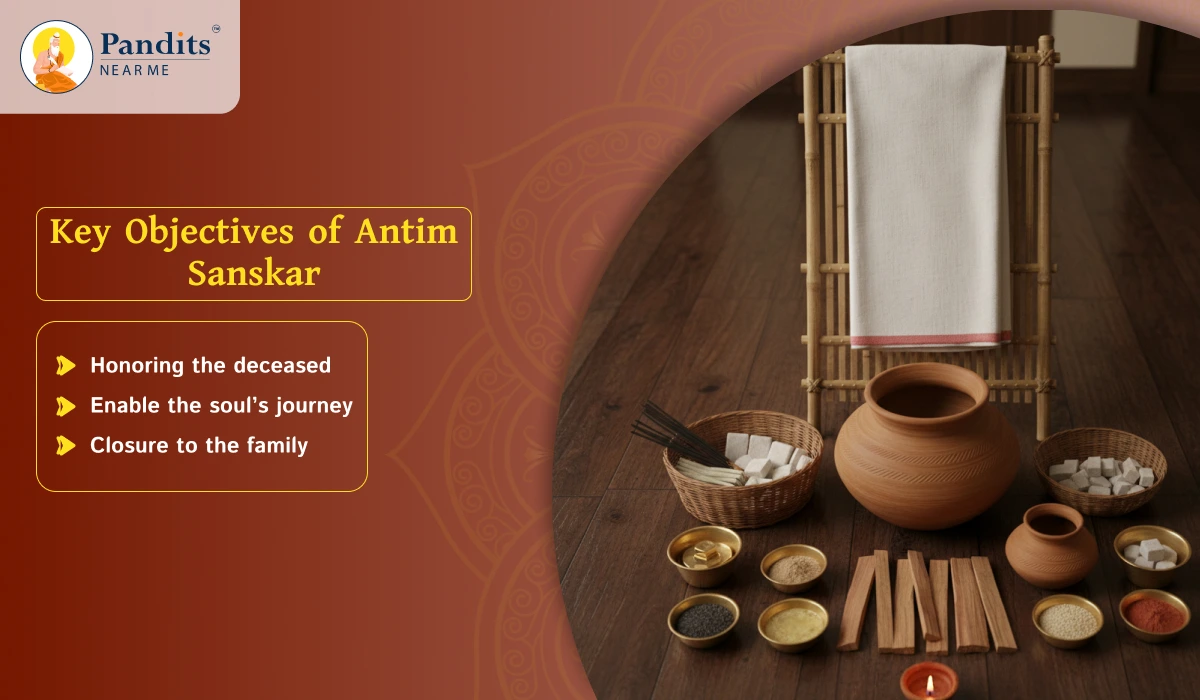
Honoring the deceased: The key objective of antim sanskar is to show respect and love for the departed.
Enable the soul’s journey: The rituals after death are aimed to help the soul transition smoothly to the afterlife, believed to be the path of Moksha (liberation of the soul.)
Closure to the family: The rituals after death help the departed’s family to come to terms with their loss and begin healing.
Also read this article: Dharmasthala Temple Darshan, Pooja Timings
Antim Sankskar Samagri Essentials
Below you will find the essential Antim Sanskar Samagri required for Antyeshti Sanskar. Each item holds its their own cultural and spiritual significance:
| Items | Quantity | Type/Role/Significance |
| Wood for the Pyre | Depends on the size of the body and local customs; typically it is several logs. | Sandalwood for fragrance and purity. Sometimes Pipal or Mango. |
| Ghee (Clarified Butter) | 500 grams to 1 kilogram. | Ghee is used to anoint the body. Also poured over the pyre to help ignite it. It symbolizes purity and is auspicious. |
| Camphor /Kapoor | Either a small container or a packet. | It is burned during the death rituals as it purifies the space and represents the soul’s journey. It’s fragrance is believed to help the soul ascend. |
| Flowers | A few Kilograms; Used to adorn the body and pyre. | Marigold, Lotus, or Jasmine. They symbolizes beauty and transient nature of life. |
| Rice | 1 to 2 kilograms is enough. | Raw rice is used in various death rituals. It symbolizes fertility and prosperity. It may be offered to the deceased during the rites. |
| Barley (Jau) | Approx. 500 grams to 1 kilogram. | Barley is also used in rituals after death, symbolizing nourishment for the departed soul. |
| Coconut | 1 or 2 coconuts. | It is placed on the pyre as it symbolizes the body; considered a sacred offering. |
| Betel Leaves and Nuts | 10 to 15 betel leaves; a small packet of betel nuts. | Betel leaves and nuts are offered during the antyeshti kriya as a sign of respect and hospitality. |
| Honey | A small jar (250 grams). | Honey shows sweetness of life and is a part of the death rituals. |
| Milk and Curd | 1 liter of milk; 500 grams of curd. | Milk and curd are purifying substances, and are either poured over the body or used as offerings. |
| Sacred Thread (Yajnopaveet) | 1 thread. | Placed on the deceased as a sign of respect, mostly for males who have done the upanayana ceremony. |
| Kesar (Saffron) | A small packet (10 grams). | Used during the rituals for its fragrance. |
| Incense Sticks (Agarbatti) | 1 or 2 packets. | They are lit during the death antyeshti sanskar to purify the environment. |
| Earthen Lamps (Diya) | 5 to 10 diyas. | They are lit to symbolize the light of knowledge and the soul’s journey. Generally placed around the pyre. |
| Gold or Silver Coins | A few coins. | Offering coins during the antim yatra is believed to facilitate the journey of the soul. It represents wealth and prosperity for the deceased. |
| Decorative Garland (Toran) | 1 toran made from fresh flowers or leaves. | Made from flowers or mango leaves, it is hung at the cremation site to ward off negative energies. |
| Sacred Texts | 1 copy of a relevant text. | Recitation of mantras is significant in antim yatra. Either a Bhagavad Gita or other sacred scriptures. |
| Water from Sacred Rivers | A small bottle or container. | Water from rivers like Ganga is used in the rituals; purifies the soul and body. |
White Cloth | 2-3 meters | It is seen as a symbol of purity and detachment from worldly life. |
Kusha Grass | Small Bundle | It is believed to purify the surroundings and attract divine energies. |
Asthi Kalash | 1 Kalash (earthen, copper, or brass) | It is used to collect and preserve the ashes and bones after cremation for Asthi Visarjan |
Black Sesame Seeds | 100-200 grams | Important for Pind Daan and Shraddha rituals. |
Panchamrit | 200-250 ml | It represents purification and divine nourishment. |
Conclusion
The antyeshi sanskar is a deeply meaningful ritual that honors the deceased and provides closure for the decease’s family. All the antim sanskar samagri used in these rituals carry their own spiritual significance and play key role in the ceremony. Understanding the importance of each items will help in conducting the rituals after death with dignity and respect.
Are you looking for experienced pandits to conduct the funeral ceremony and other Hindu rituals after death? If so, connect with Pandits Near me today! We are a web based platform offering booking with both offline and online pandits for various rituals under budget!