






Admired as one of South India’s pilgrimage centres, Dharmasthala Temple is located in the Belthangady taluk of Dakshina Kannada district, Karnataka. The interesting thing to note about Dharmasthala Temple is it’s unique blend of Shaiva, Vaishnava, and Jain traditions. The temple is dedicated to Manjunatha Swamy (Shiva), where Jain administrators run a Shaivite shrine served by Vaishnava priests.
Attracting millions of devoted pilgrims every year, the Dharmasthala Temple is a religious landmark and a center of cultural harmony and social service. Read on further to find out about the Dharmasthala Temple history, Pooja timings, how to reach the location and more.
Dharmasthala Temple History
Origins of Dharmasthala Temple
According to the legends, the guardian angels of Dharma assumed a human form and arrived at the home of the Jain chieftain Birmanna Pergade and his wife Ammu Ballalthi. Pleased by their hospitality, the angle instructed them to vacate their house for the worship of the Daivas.
The priests later requested the Pergade to install a Shivalinga beside the native Daivas, following which the Manjunatha temple was built around the linga.
Benefits of Praying to manjunatha swamy
Worship and praying to Lord Manjunatha (Shiva) at Dharmasthala is said to bring peace, prosperity, spiritual strength, and salvation to its devotes. The devotees visit this temple to atone for their sins and gain forgiveness from Lord Manjunatha
Role of Heggade Family
From then till now, the Heggade Family has played a huge role in preserving the Dharmasthala Temple and its social impact. As Dharmadhikaris, they cover a wide range of duties, from religious administrators and all the way to education, healthcare, and cultural promotion.
Dr. Veerendra Heggade & Family
As the 21st Dharmadhikari of Dharmasthala, Dr. Veerendra Heggade has converted the Dharmasthala Temple into a hub of social reforms. Here are a few examples of Dr. Veerendra Heggade’s initiatives:
Created educational institutions that benefits countless students.
Free mass marriages take place every year to help and support families.
Established rural development programs that improve self-sufficiency and livelihood.
Established healthcare centers that offer accessible medical services.
The Main Deity – Manjunatha Swamy
Significance in Mythology
In Dharmasthala, Manjunatha Swamy is worshipped as a warm-hearted form of shiva. The Scriptures of ages always associate Manjunatha Swamy with the compassionate and auspicious Shiva, the granter of welfare and remover of obstacles.
The devotees who visit Dharmasthala Temple view Manjunatha Swamy as the Lord who accepts simple and sincere vows and offering, blessing them with health, harmony, and the correct livelihood.
Rituals and Practices
The Dharmasthala Temple follows the pattern of daily worship, following the Vaishnava tradition for Manjunatha Swamy’s Shiva linga. Devotees offer coconuts, bilva leaves, ghee, and special sevas.
Pooja happens three times, (morning, midday, & evening) which is accompanies by Vedic chants and reciting strotras. The Dharmasthala Darshana is followed by prasada, strengthening the meaning of gratitude, equality, and dharma in action.
Dharmasthala darshana timings
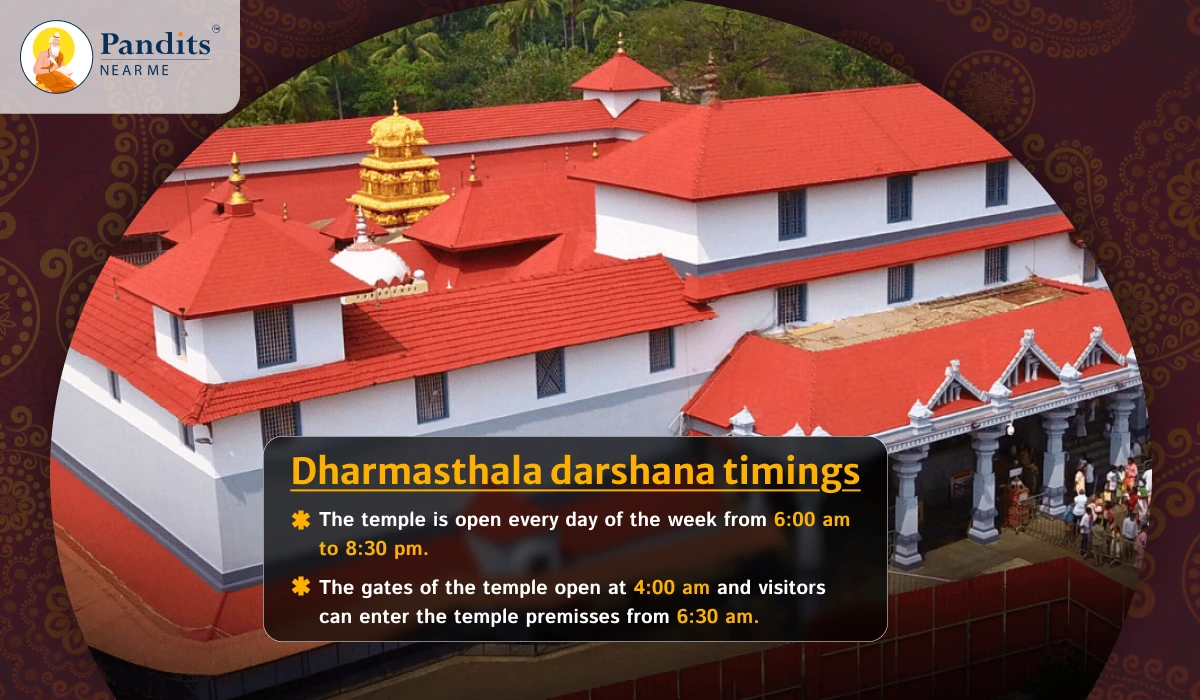
The temple follows a strict timing schedule, which has to be followed by its devotees. The temple is open every day of the week from 6:00 am to 8:30 pm. The gates of the temple open at 4:00 am and visitors can enter the temple premisses from 6:30 am.
Below are the different Dharmasthala Temple timings:
Dharmasthala pooja timings (with Archana):
| Event | Timings |
| Darshana | 6:30 am to 11:00 am |
| Shatharudrabhisheka & Pooja | 8:30 am to 10:30 am |
| Food is offered to Lord Manjunatheswara | 11:30 am |
| The temple remains closed for darshana | 12:10 pm |
| Darshana | 12:15 pm to 2:30 pm |
| Darshana | 5:00 pm to 8:30 pm |
| Mahapooja | 8:30 pm |
Office Timings:
· Morning: 9:30 am to 2:00 pm
· Evening: 4:00 pm to 9:00 pm
Things to Note
The timings may change on weekends, auspicious tithis, and during festivals and processions. Some sevas could be shifted or paused when the utsava murti is in procession. While the Annadana typically takes place within the noon/evening times, it may be staggered for crowed management purposes.
Make sure to always check the display boards at the temple, pay attention to the announcements through the loudspeaker, or visit help desks for the particular day’s schedule.
Festivals celebrated at Dharmasthala Temple
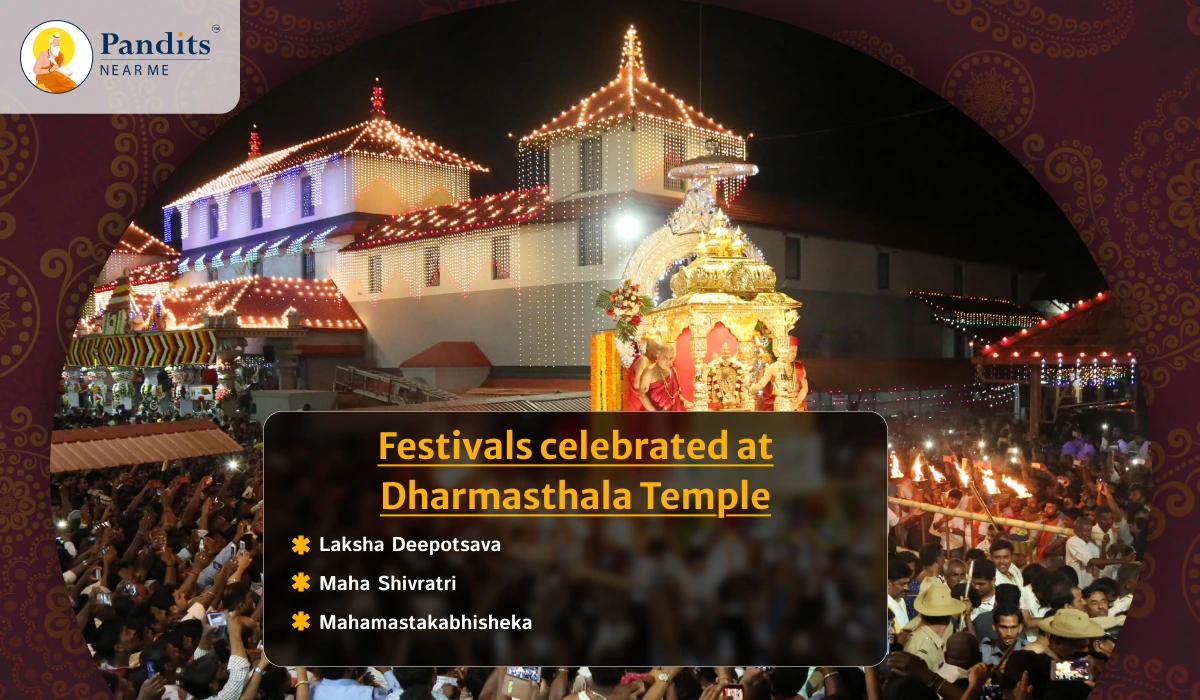
The Dhamasthala hosts many grand festivals every year, which are as follows:
1. Laksha Deepotsava:
During this festival the temple along with its surroundings are lit with thousands of lamps.
2. Maha Shivratri:
Elaborate pujas of the Lord Shiva is conducted at the Dharmasthala temple throughout the night, attracting pilgrims from all across India.
3. Mahamastakabhisheka:
During Mahamastakabhisheka, 1,008 kalashas of sacred liquids and powders are poured over the monolithic Bahubali statue.
Places to visit at Dhamasthala Temple
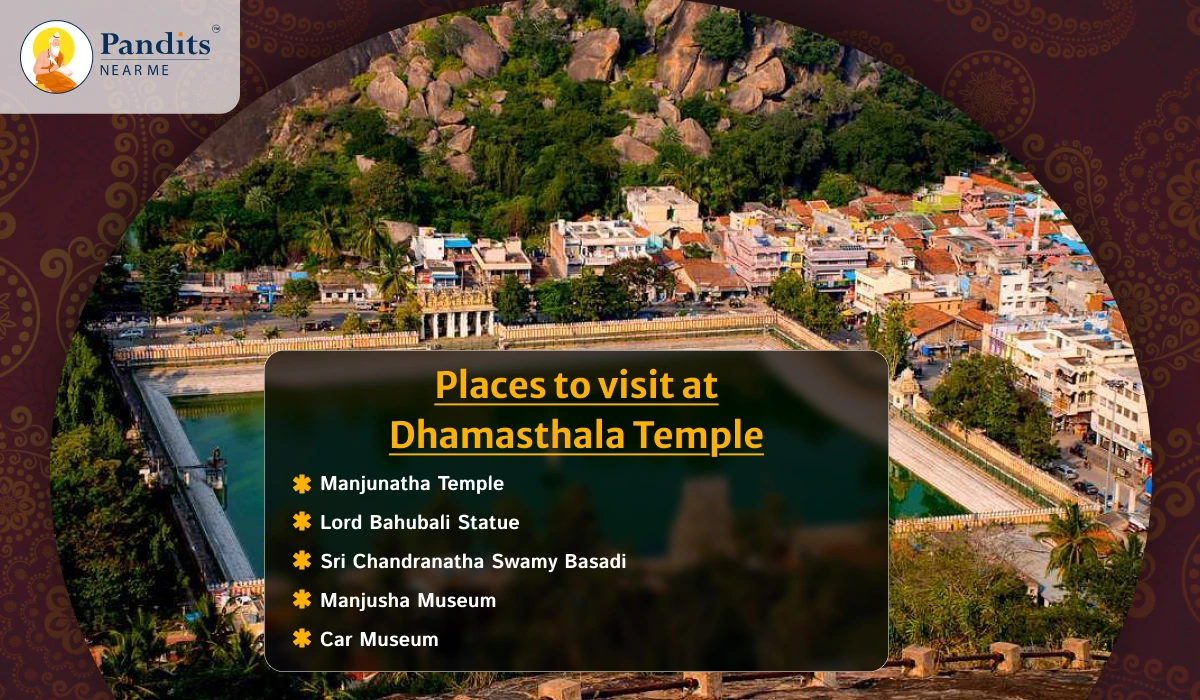
Some of the places you can visit within the Dhamrasthala temple are as follows:
1. Manjunatha Temple:
The main temple that houses the Lord Manjunatha in the form of a Shivalinga.
2. Lord Bahubali Statue:
This is a 39 feet stone monolith, which is a symbol of non-violence.
3. Sri Chandranatha Swamy Basadi:
A beautiful Jain temple constructed in white market, which is a crucial pilgrim place for Jains.
4. Manjusha Museum:
Home to wide range of relics, including ancient scriptures on palm leaves, historic household goods, and silver jewellery
5. Car Museum:
Houses many vintage cars that are owned by Dr Veerendra Heggade.
Also read this article : What is the history of astrology in India?
Dharmasthala Temple Transportation
How to Reach Dharmasthala Temple
Traveling to Dharmasthala Temple has become significantly easier thanks to good road connection. You can either drive there or catch on of the buses that tends to run from connecting cities in Karnataka.
If you are flying in, the closest airport to the temple is the Mangalore International Airport. Once you land, just grab a taxi or take a bus.
Mangalore also has a train station. Same as the airport, just grab a taxi or bus from the station to the Dharmasthala temple.
| Mode of Transport | Details you should know |
| By Road | Direct buses or taxis from Mangalore (75 km), Bangalore (300 km), and other cities. |
| By Train | Nearest stations: Mangalore Junction (74 km), Subrahmanya Road (55 km) |
| By Air | Nearest airport: Mangalore International Airport (75 km) |
| By Bus | Regular buses from cities (Mangalore, Udupi, Bangalore, and Mysore) |
Distance of Nearby Cities
| City | Distance from the Dharmasthala Temple |
| Mangalore | 75 km |
| Udupi | 100 km |
| Chikmagalur | 116 km |
| Hassan | 95 km |
| Mysore | 215 km |
| Bangalore | 300 km |
| Madikeri | 85 km |
| Shimoga | 130 km |
| Kasaragod | 105 km |
| Hubli | 365 km |
Why Choose Pandits Near Me
As more and more Hindus move more and more towards adopting modern lifestyle, Pandits Near Me is looking to make people more aware about the importance of every ritual and ceremony. We are a one-stop solution for Hindu activities, including pujas, rituals, and varied ceremonies. Our platform makes it easy for Hindus from all across the world to connect with experienced and authentic pandits for spiritual guidance and conducting various pujas.
Services offered by Pandits Near Me
1. Pitru Paksha Shradha Puja
2. Pitra Dosh Puja
3. Narayan Nagbali Puja
4. Tripindi Shradha Puja
5. Antim Sanskar
How can Pandits Near Me Help you?
Pandits Near Me help you maintain spiritual discipline and align your life according the values of the Hindu dharma, strengthening individual’s faith, and strengthening and restoring communal bonds. We help you get in touch with your ancestral roots and align your life. Through our application, you can book for an online puja services at Dharmasthala Temple from across the globe in just a few.
Conclusion
Dharmasthala Temple is a fascinating mix of religious practices, cultural history, and community service. Located in Karnataka, this temple provides a profound experience with its history and natural beauty. It is definitely worth a visit if you are religious, or even if you are just visiting Karnataka.
Dharmasthala Temple is one of the most spiritual destination in Karnataka and is a beacon of cultural harmony, human service, and social reform. Using the Pandit Near Me application, you can book a virtual puja at the Dharmasthala Temple.