
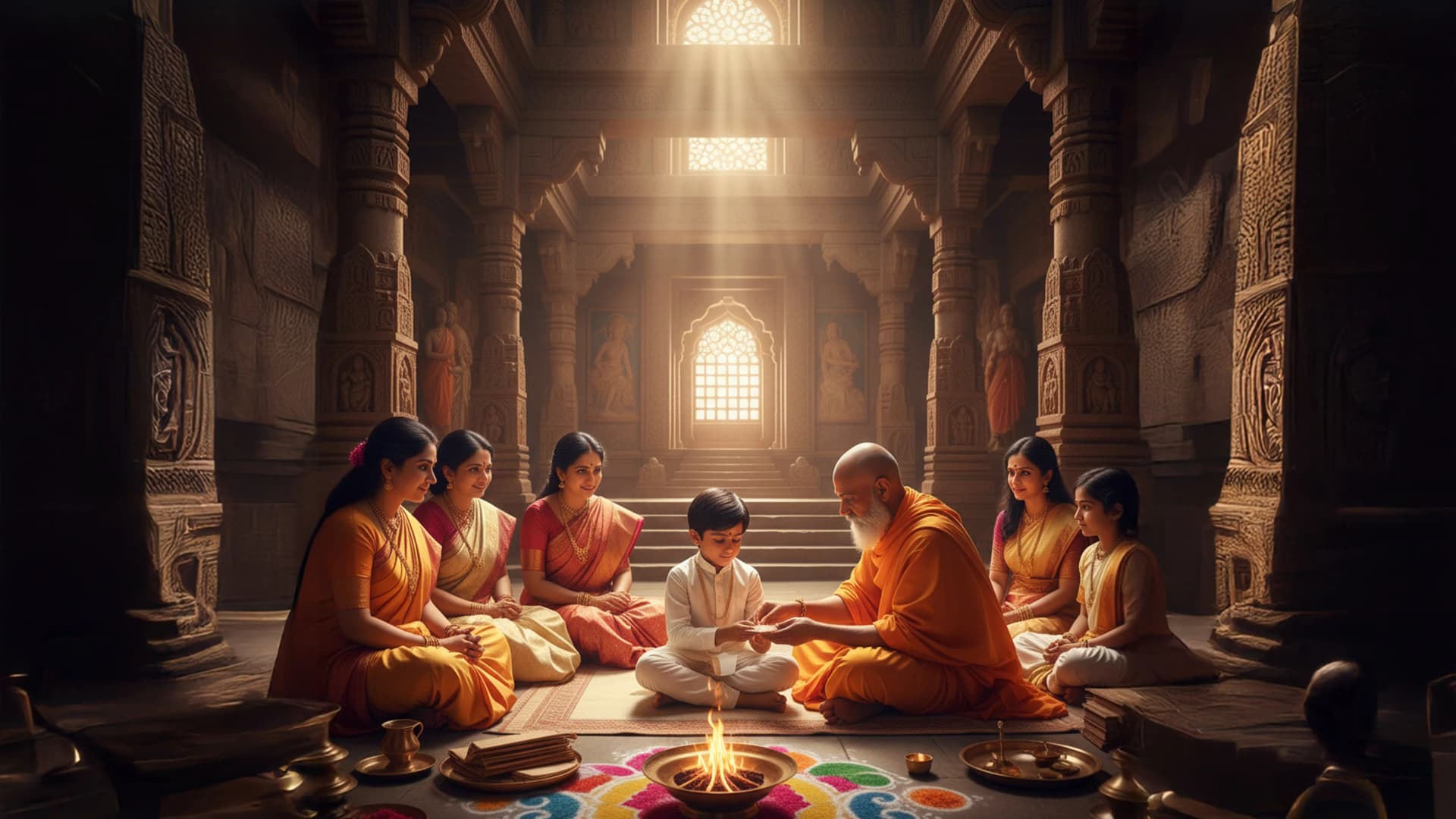
Begin Your Child’s Learning Journey with Sacred Vidyarambh Sanskar Puja
Celebrate the Vidyarambham Ceremony and seek divine blessings for wisdom, knowledge, and academic success.
What is Vidyarambh Sanskar Puja?
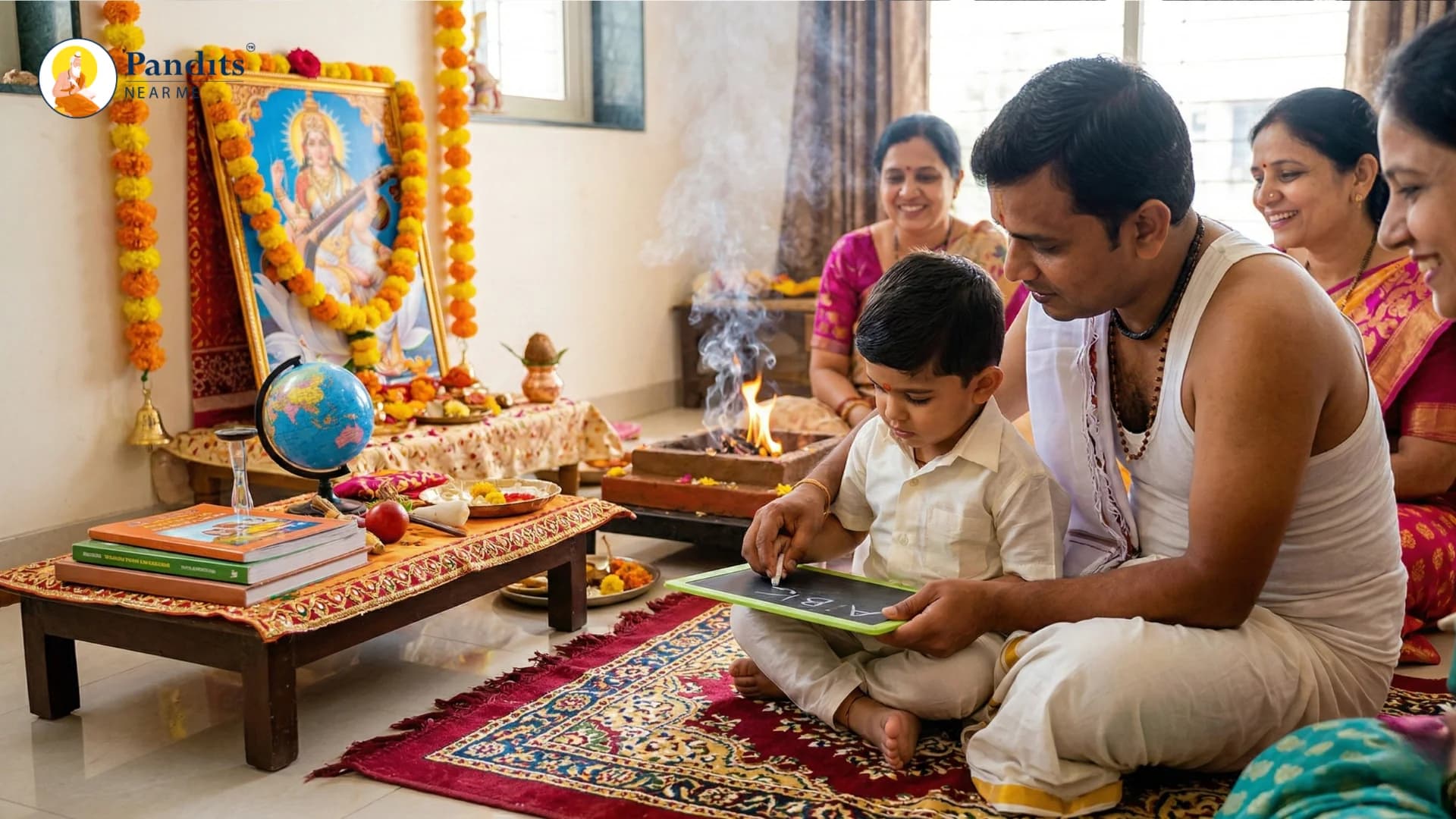
Vidyarambh Sanskar Puja marks the beginning of a child’s education. Through the Vidyarambh Sanskar puja vidhi, the child writes their first letters while seeking divine blessings for wisdom, knowledge, and academic success.

When Is Vidyarambh Sanskar Puja Performed?
Vidyarambh Sanskar Puja is typically performed when a child is between 2 to 5 years old, marking the formal beginning of education through the sacred Vidyarambham Ceremony. Auspicious Occasions The most favorable days for Vidyarambh Sanskar Puja at home include: - Vasant Panchami – Dedicated to Goddess Saraswati and ideal for blessings of wisdom. - Vijayadashami (Dussehra) – Symbolizes victory of knowledge over ignorance. - Akshaya Tritiya – Considered highly auspicious for new beginnings. Muhurat Selection for Vidyarambham Ceremony The pandit ji checks: - The child’s Janma Kundali (Birth chart) - Nakshatra and Tithi - Favorable planetary positions
Deities Associated with Vidyarambham Ceremony
The Vidyarambh Sanskar Puja at home is performed by invoking divine blessings for wisdom, clarity, and a successful educational journey. The deities mentioned below are primarily worshipped during the Vidyarambh Sanskar puja vidhi: Goddess Saraswati Goddess Saraswati is the main deity of the Vidyarambh Sanskar puja. She represents knowledge, wisdom, learning, arts, and intellect. Seeking her blessings ensures sharp memory, concentration, and academic excellence. Lord Ganesha Lord Ganesha is worshipped at the beginning of every ritual. In the Vidyarambham Ceremony, he removes obstacles and ensures a smooth educational journey. Goddess Lakshmi Goddess Lakshmi is invoked for prosperity and success, ensuring that education brings both wisdom and abundance in life.
Vidyarambh Sanskar Puja Samagri
For a proper Vidyarambh Sanskar puja, all items should be arranged in advance to ensure the Vidyarambh Sanskar puja vidhi proceeds smoothly. The following samagris are commonly required:
- Idol or Photo of Goddess Saraswati and Lord Ganesha
- Kalash
- Mango Leaves
- Coconut
- Ghee
- Diya and Incense Sticks
- Camphor
- Flowers
- Fruits
- Sweets
- Panchamrit
- Akshata
- Kumkum and Turmeric
- Plate filled with Raw Rice
- Slate and Chalk
- Gold Ring
- Betel Leaves and Nuts
Vidyarambh Sanskar Puja Vidhi
Whether performed in a temple or as a Vidyarambh Sanskar puja at home, the Vidyarambh Sanskar puja vidhi remains largely the same, with minor regional variations.
- Kalash Sthapana : A sacred Kalash filled with water is established on the altar, decorated with mango leaves and topped with a coconut to symbolize divine presence.
- Ganesha Puja : The ritual begins by invoking Lord Ganesha to remove obstacles and ensure a smooth educational journey.
- Saraswati Puja : Prayers and mantras are offered to Goddess Saraswati seeking blessings for wisdom, intelligence, and concentration.
- Sankalp : Parents state the child’s name, gotra, and purpose of performing the Vidyarambh Sanskar Puja. The pandit ji chants Vedic mantras for knowledge and growth.
- Akshara Lekhan : Now comes the most important step of the Vidyarambham Ceremony: - A plate filled with raw rice is placed before the child. - Either the pandit or a parent holds the child’s hand. - The child write “ॐ”, “श्री”, or first alphabet betters. - In some traditions, a gold ring is used to guide the writing.
- Ashirwad : Concluding the ceremony, pandit ji and elders of the family bless the child for academic success and bright future. Prasad is also distributed amongst the attendees.
Regional Variations on Vidyarambham Ceremony
The Vidyarambh Sanskar Puja is celebrated across India with beautiful regional traditions.
- Kerala: EzhuthiniruthuIn Kerala, the ceremony is referred to as Ezhuthiniruthu, which translates to "initiation into writing.” It is commonly performed on Vijayadashami.
- West Bengal: Hate KhoriIn West Bengal, the ritual is called Hate Khori and is performed on Saraswati Puja day. The child writes their first Bengali letters on a slate as part of the Vidyarambh Sanskar puja at home.
- Andhra Pradesh & Telangana: AksharabhyasamIn these regions, the Vidyarambham Ceremony is commonly performed during Dasara or Akshaya Tritiya, with the child writing “Om” on the plate of rice grains.

Get Your
FREE
Janam Kundali




 100% Accurate Predictions
 Trusted by Lakhs of Users
 Secure & Private
 24×7 Expert Support100% Accurate PredictionsTrusted by Lakhs of UsersSecure & Private24×7 Expert Support100% Accurate PredictionsTrusted by Lakhs of UsersSecure & Private24×7 Expert Support
Book Your Puja
Fill the form below and we will contact you soon