
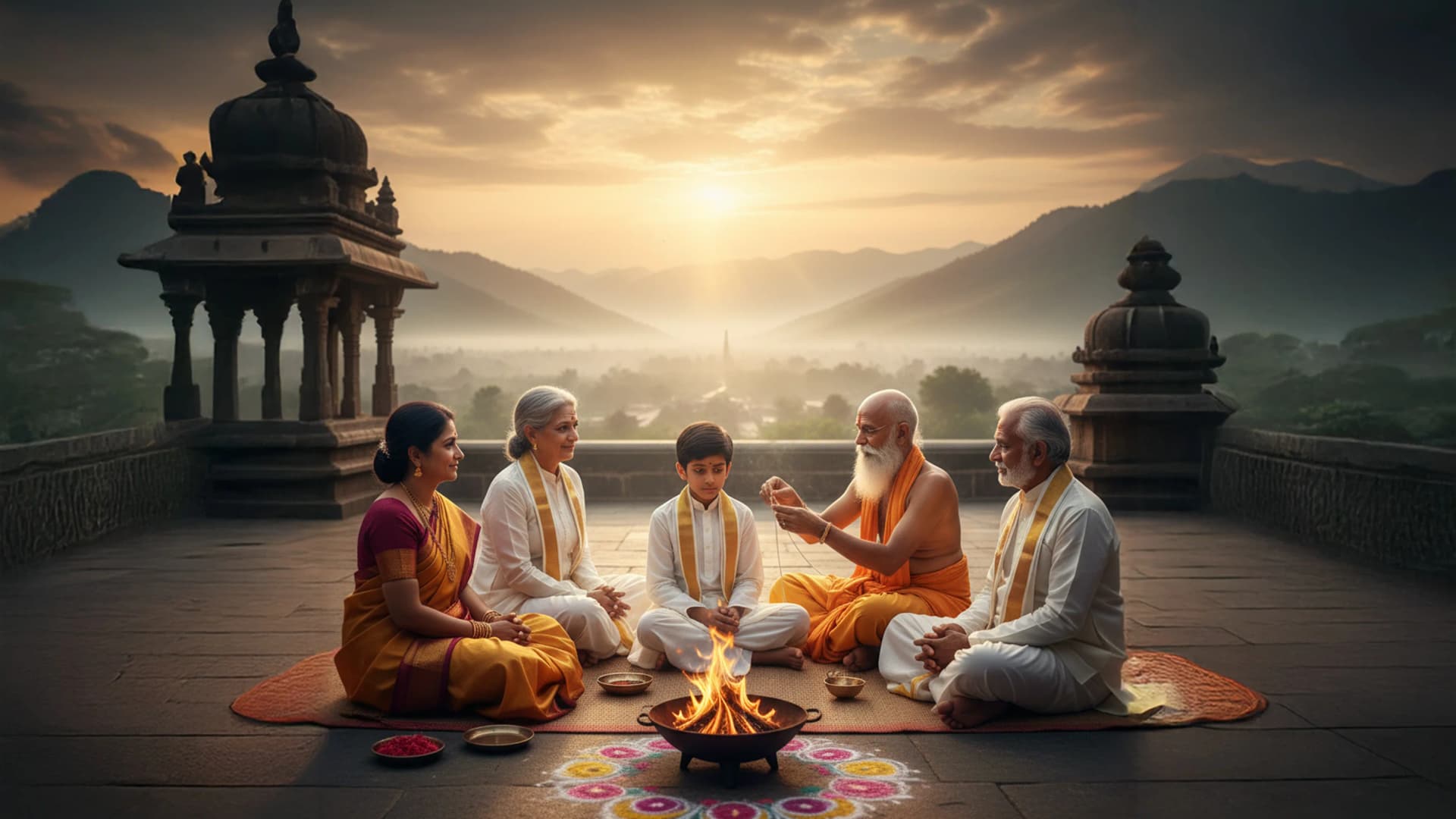
Begin a Sacred Journey with the Divine Upanayana Ceremony
Experience the spiritual divinity of Upanayanam and step into a life of dharma through the sacred Brahmin thread ceremony.
What is Upanayana Ceremony?
Upanayana Ceremony,also known as the Brahmin thread ceremony, is a sacred initiation ritual that marks the beginning of Vedic learning

Meaning & Significance: What is Thread Ceremony?
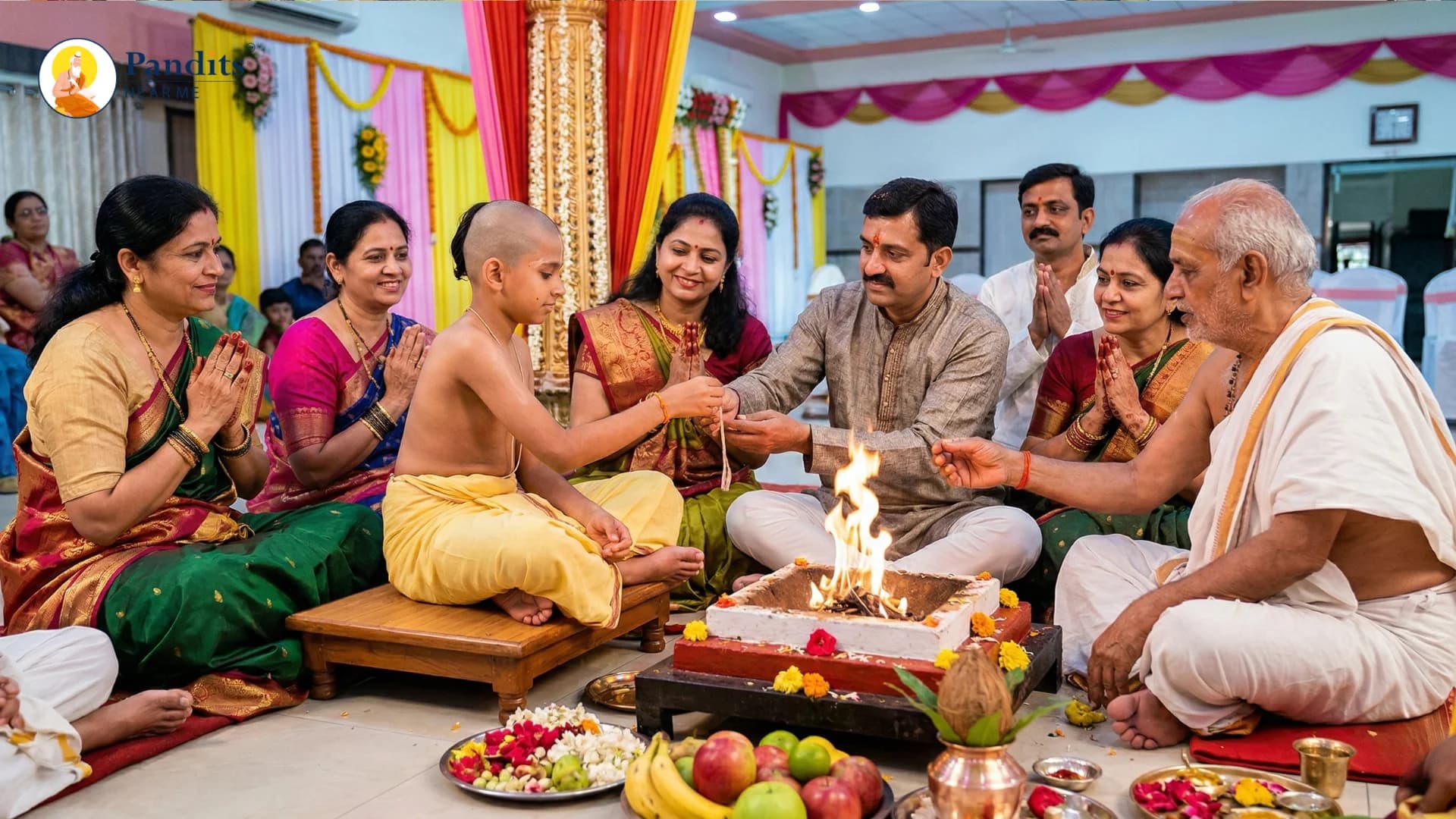
If you are wondering what is thread ceremony, it refers to the sacred Upanayana Ceremony, also known as Upanayanam or the Brahmin thread ceremony, which is a powerful rite of passage in the Sanatana Dharma.
What is Upanayanam?
To understand what is Upanayanam, we must first know the Upanayanam meaning. The term comes from Sanskrit: Upa – Near Nayana – To lead Thus, Upanayanam meaning is “to lead the child closer to the Guru and divine knowledge.” The Upanayana Ceremony marks the beginning of Vedic learning, Gayatri mantra initiation, and a disciplined spiritual life under the guidance of a Guru.
When is Upanayana Ceremony Done?
For Brahmin families, the Upanayana Ceremony is traditionally performed at a specific age and during an auspicious muhurat. Traditional Age (As Per Shastras) According to Dharmashastra texts: - The ideal age for a Brahmin boy is 8 years old. - It can also be performed between 7–12 years. - Some traditions calculate from conception, making it around the 7th year after birth. Auspicious Muhurat The Upanayana Ceremony is usually conducted during: - Vasant Ritu - Shubh Tithis and Nakshatras - Months like Magha, Phalguna, Chaitra, or Vaishakha
Significance of Yajnopavita
In the Brahmin thread ceremony, the most sacred element is the Yajnopavita. It is the defining symbol of the thread ceremony and represents spiritual rebirth and responsibility. Yajnopavita is the sacred thread that is worn over the left shoulder and under the right arm after the Upanayana ceremony. Symbolism of the Three Strands The sacred thread typically has three strands, that represents: - The three debts (Rishi, Deva, Pitru Rin) - The three Gunas (Sattva, Rajas, Tamas) - The divine trinity: Brahma, Vishnu, and Shiva
Upanayana Ceremony Samagri
For a complete Upanayana Ceremony, sacred items are required to perform the Vedic rituals properly. These include:
- Yajnopavita (Sacred Thread)
- Dhoti & Angavastram
- Kalash
- Idol or Picture of Lord Ganesha
- Ghee
- Deer Skin (Mekhala)
- Staff (Danda)
- Akshata
- Flowers
- Sandalwood Paste
- Kumkum
- Fruits
- Betel Leaves and Nuts
- Coconut
- Sweets
Upanayana Ceremony Vidhi
Here’s a step-by-step explanation of the Brahmin thread ceremony:
- Sankalp : The Upanayana Ceremony begins by taking a sankalp, where the parents and child make a vow to perform the ritual sincerely, seeking divine blessings for knowledge and purity.
- Kalash Sthapana : A sacred Kalash is installed as a symbol of divine energy.
- Ganesh Puja : Before starting the ritual properly, Lord Ganesha is invoked to remove any obstacles and ensure a smooth process.
- Homam : A holy fire is lit, and mantras are chanted to purify the environment. Oblations of ghee, grains, and herbs are made to invoke blessings from the gods.
- Mundan : In many traditions, the child’s head is shaved to signify the removal of past impurities and start a new spiritual chapter of his life.
- Yajnopavita Dharan : Now comes the most important step. The pandit places the sacred thread around the child’s left shoulder, crossing diagonally across the chest. It symbolizes the acceptance of spiritual responsibility and the readiness to pursue higher learning.
- Gayatri Mantra Initiation : The child is then taught the Gayatri Mantra, one of the most powerful and sacred chants in Hinduism. It marks the spiritual rebirth of the child and the beginning of the Brahmacharya Ashram.
- Brahmacharya Vrat : After the Upanayana ceremony is complete, the child is expected to follow the path of Brahmacharya to maintain purity in thoughts and actions.

Get Your
FREE
Janam Kundali



 100% Accurate Predictions
 Trusted by Lakhs of Users
 Secure & Private
 24×7 Expert Support100% Accurate PredictionsTrusted by Lakhs of UsersSecure & Private24×7 Expert Support100% Accurate PredictionsTrusted by Lakhs of UsersSecure & Private24×7 Expert Support
Book Your Puja
Fill the form below and we will contact you soon