
Book Trusted Pandits for Authentic Pind Daan Puja Services
Book Your Puja
Tailored spiritual experiences for every need

What is Pind Daan Puja?
Pind Daan Puja is one of the most sacred Hindu rituals performed to honor deceased ancestors and pray for the peace and liberation of their souls. If you are wondering “Pind Daan kya hai?” or “Pind Daan kya hota hai?” It is a ritual in which offerings, known as pind (rice balls made with rice, barley flour, black sesame seeds, and ghee), are offered to departed family members. The pind daan meaning comes from the Sanskrit words Pind (offering) and Daan (donation), symbolizing devotion, gratitude, and remembrance of one’s ancestors.
Many people ask, Pind Daan se kya hota hai. According to Hindu scriptures, performing this ritual helps provide peace to departed souls, fulfills ancestral duties, and seeks the blessings of the Pitrus for the family’s well-being. It is commonly performed during Pitru Paksha, on the deceased’s annual Shradh, or at sacred pilgrimage sites such as Gaya, Prayagraj, Haridwar, and Varanasi.
There are different types of Pind Daan, including Pind Daan during Pitru Paksha, annual Tithi Shradh Pind Daan, Narayan Bali-related Pind Daan, and rituals performed at holy tirthas. The best day for Pind Daan is generally the ancestor’s death anniversary (Tithi) or during the 16-day Pitru Paksha, when it is believed that ancestors visit their descendants to receive offerings and blessings.
Pind Daan Vidhi
The Pind Daan Vidhi is performed under the guidance of a knowledgeable Vedic pandit to ensure every ritual is carried out according to Hindu traditions. While the exact procedure may vary by region and family customs, the essential steps remain the same.
Sankalp (Sacred Resolution): The ritual begins with a Sankalp, where the devotee takes a vow to perform Pind Daan for specific departed ancestors.
Preparation of Pind: The Pind Daan samagri typically includes cooked rice, black sesame seeds, barley flour, ghee, honey, Kush grass (Darbha), Gangajal, flowers, and fruits. These ingredients are used to prepare the sacred pind offerings.
Invocation and Mantra Chanting: The pandit invokes the ancestors and recites the appropriate Pind Daan mantra, seeking blessings and peace for the departed souls while the devotee offers prayers with devotion.
Offering of Pind and Tarpan: Following the Pind Daan karne ki vidhi, the prepared pind is offered to the ancestors, followed by Tarpan, where water mixed with black sesame seeds is offered as an expression of gratitude and remembrance.
Dakshina and Blessings: The ceremony concludes with prayers, offerings to the pandit, and seeking blessings for family harmony, prosperity, and the spiritual peace of departed ancestors.
Benefits of Pind Daan
Performing Pind Daan is believed to bring spiritual peace to departed ancestors while fulfilling an important duty towards one’s family lineage. According to Hindu traditions, this sacred ritual offers several spiritual and emotional benefits, including:
Helps departed souls attain peace and spiritual liberation.
Fulfills Pitru Rin (ancestral debt) as prescribed in Hindu scriptures.
Seeks the blessings of ancestors for family prosperity and well-being.
Reduces the effects of Pitru Dosh through sincere ancestral offerings.
Promotes harmony, health, and positivity within the family.
Strengthens the spiritual bond between generations by honoring ancestors.
Provides inner peace and satisfaction by fulfilling religious responsibilities.
Traditionally performed during Pitru Paksha, Shradh, or on the ancestor’s death anniversary for maximum spiritual significance.
Many devotees choose sacred Pind Daan places in India, including Gaya, Prayagraj, Varanasi, Rameswaram, and Pind Daan in Haridwar, to perform the ritual according to Vedic traditions.
These holy destinations are also regarded as the best place for Pitra Dosh puja, where experienced pandits conduct authentic rituals with proper mantras and customs.
Book Pind Daan Puja Online or In Person
Book experienced Vedic pandits for Pind Daan Puja through online or offline services. Perform this sacred ritual with proper traditions, transparent pricing, and dedicated support.

Offline / Online Pind Daan Puja
With Pandits Near Me, you can perform Pind Daan in the way that best suits your needs.

Offline Pind Daan
Pind Daan Performed By Vedic Pandit At Holy Places Or Your Location
- •Book verified pandits for Pind Daan at sacred locations like Gaya, Haridwar, Prayagraj, and Varanasi.
- •Perform the ceremony in person under the guidance of experienced Vedic pandits.
- •Complete support with ritual coordination and puja arrangements.
- •Convenient booking, verified pandits, and dedicated assistance throughout the ceremony.

Online Pind Daan
Pind Daan Performed By Vedic Pandit On Video call
- •Book online pind daan gaya services and participate in the ritual from anywhere via live video.
- •Ideal for devotees who cannot travel but wish to perform authentic Pind Daan.
- •Wondering How to do Pind Daan at home? Our pandits guide you through a home-based ritual or perform it online on your behalf.
- •Transparent pricing, verified pandits, and end-to-end support for a seamless experience.
How We Help
See how it works and simplify your puja booking experience.

Select Your Puja

Provide Your Details

Get Call From Us

Puja Confirmed

Types of Shradh Puja We Offer
Choose the right Shradh Puja based on your family’s traditions and ancestral rituals.
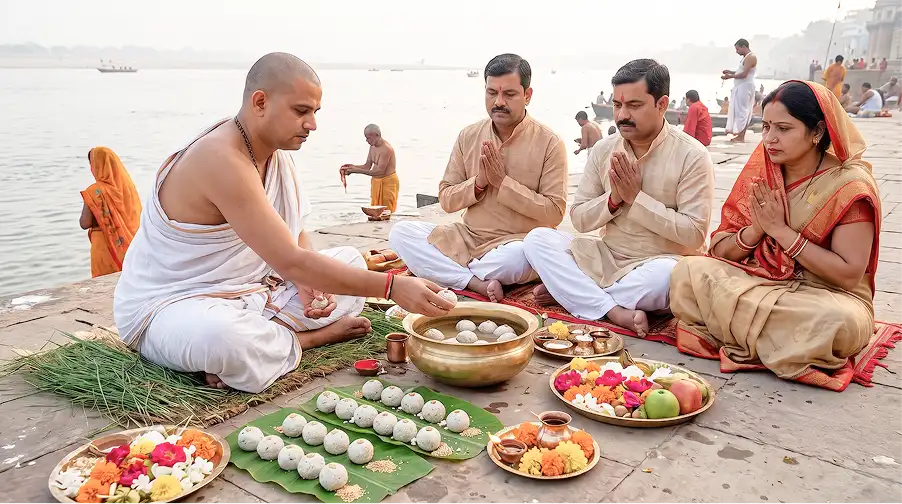
Sapindikaran Puja
A traditional ceremony marking the completion of important post-funeral rituals.
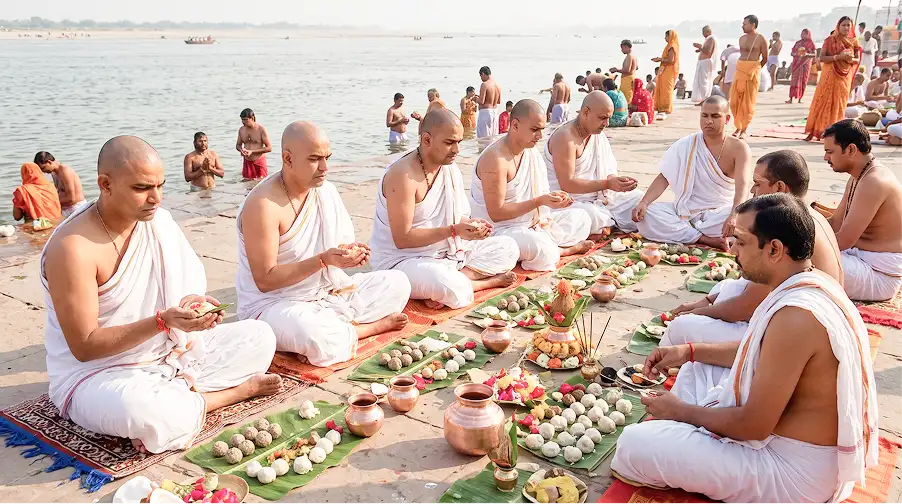
Mahalaya Shradh Puja
Offer collective prayers to departed ancestors on the auspicious Mahalaya Amavasya
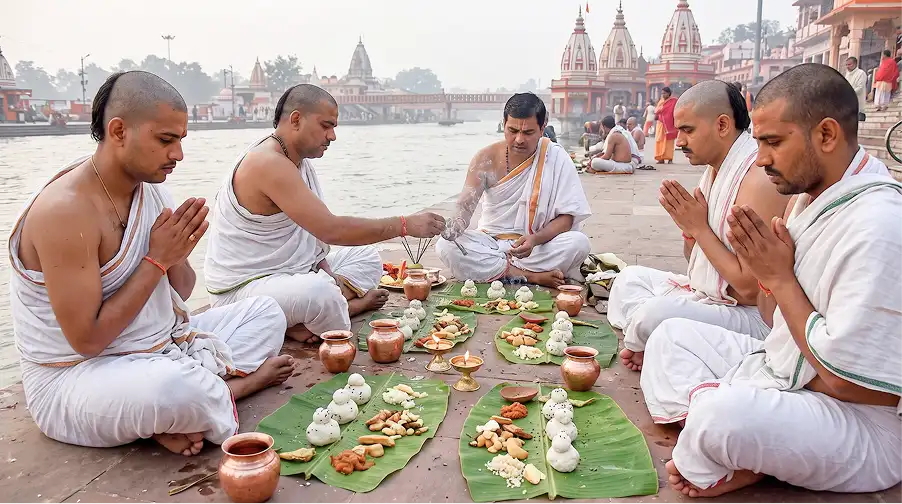
Tripindi Shradh Puja
A Vedic ceremony dedicated to ancestors believed to require special spiritual offerings.
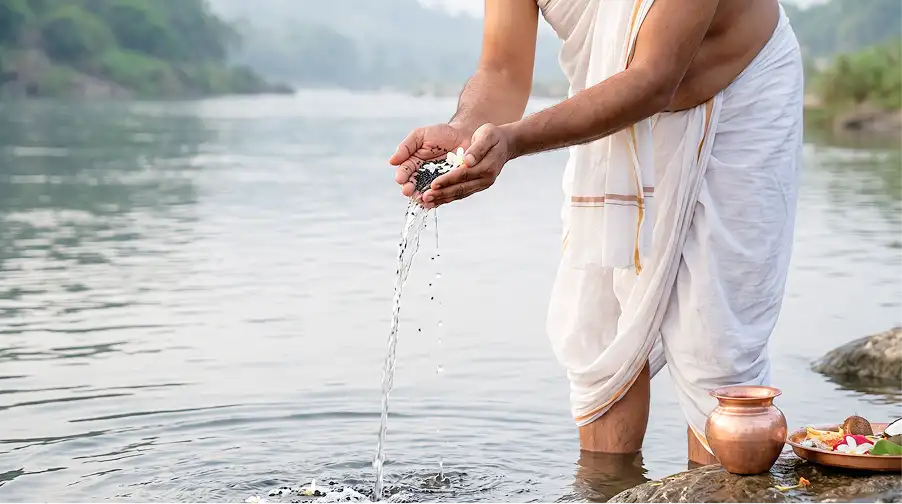
Nitya Tarpan Puja
A simple yet sacred daily offering of water and sesame seeds to departed souls.
Loading reviews...
Frequently Asked Questions
Traditionally, the eldest son performs Pind Daan. However, other family members such as daughters, grandsons, brothers, or legal heirs may also perform the ritual according to family traditions and under the guidance of a qualified pandit.
No. While Pitru Paksha is considered the most auspicious period, Pind Daan can also be performed on the deceased’s annual Shradh (Tithi), Amavasya, or other suitable dates as advised by a pandit.
Yes. Many devotees living abroad choose online Pind Daan services, where verified pandits perform the ritual on their behalf while they participate through a live video session.
Download our Application now!
Scan the QR code to get the User and Pandit ji app now