









Did you know that Swastik is one of the oldest and most revered symbols of human history? For thousands of years, the Swastik symbol has been discovered among different civilizations and cultures with rich spiritual, cultural, and philosophical significance. In Hinduism, Buddhism, Jainism, and also in many other traditions, the holy symbol is considered a powerful symbol of prosperity, good fortune, and overall harmony.
Yet, over time, the Swastik sign was sadly misinterpreted due to misuse in history. This has often left people asking: What is the meaning of the Swastik symbol, and why has it remained so important for centuries?
In this blog, we’ll explore what is the meaning of swastik symbol, its origin and significance across various religions and spiritual role as a sacred Vedas symbol that represents balance, divine order, and cosmic blessings.
Meaning Of Swastik Symbol

When someone asks, "What is the meaning of the Swastik symbol?", the answer is simple yet complex. Swastika is a word derived from Sanskrit, where su means "good" or "auspicious," and asti means "to be." Combined, they mean "well-being" or "that which is auspicious."
The significance of the symbol
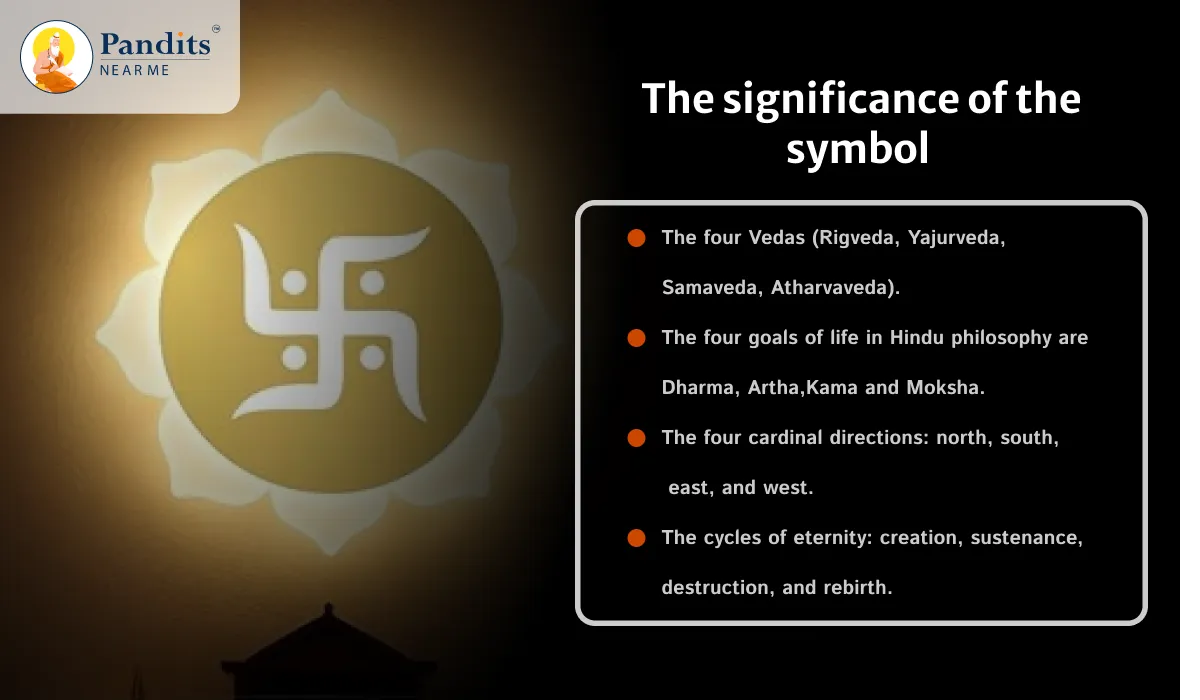
The Swastik mark is a symbol of balance and harmony. Its four arms face various directions, thus signifying:
- The four Vedas (Rigveda, Yajurveda, Samaveda, Atharvaveda).
- The four goals of life in Hindu philosophy are Dharma (obligation), Artha (wealth), Kama (longings), and Moksha (salvation).
- The four cardinal directions: north, south, east, and west.
- The cycles of eternity: creation, sustenance, destruction, and rebirth.
The Swastik, therefore, is not merely a geometric symbol but a symbol of universal order, divine power, and prosperity based on the Vedas.
The History of the Swastika Across Cultures
One of the oldest symbols known to man, the Swastika has been discovered on artifacts over 10,000 years old. It has appeared on pottery, coins, temples, and manuscripts in regions covering India to Greece, China, Mesopotamia, and even in the Americas.
Swastika Across Cultures
Indus Valley Civilization (2500 BCE): Excavations at Mohenjo-Daro and Harappa show that Swastik symbol was very common, symbolizing abundance and fertility.
Hindu Tradition: In Hinduism, the Hindu Swastika is linked with Lord Vishnu, the protector of the universe, and Goddess Lakshmi, the goddess of prosperity. It represents new beginnings and good fortune.
Buddhism: In Buddhism, Buddha's footprints are represented by the Swastik symbol and stand for eternity, compassion, and truth.
Jainism: The Swastika symbol for Jains represents the four states of life—divine souls, humans, animals, and hellish souls.
Western World: The Swastika in Greek, Celtic, and Native American societies was a symbol for the sun, movement, and life force.
Unfortunately, in the 20th century, the Swastika was misused by the Nazi regime and gained a negative image in the West. But actually, the Swastik sign continues to be a sacred sign of peace, prosperity, and cosmic harmony.
The Hindu Swastika and Its Spiritual Significance
In Hinduism, the Hindu Swastika is a religious symbol that holds an important place in rituals, temple decoration, and everyday use. It is commonly drawn using red vermillion, turmeric, or sandalwood paste on doors, thresholds, and on religious objects.
Major Forms of Swastik Symbol in Hinduism :

Right-facing Swastika: This clockwise-rotating version is the most favored. It symbolizes the sun, dharma, prosperity, and movement ahead in life.
Left-facing Swastika (Sauwastika): Also less frequent but equally important in Tantric rituals, symbolizing Goddess Kali, darkness, and secret knowledge.
Common Applications of the Hindu Swastika:
At Puja: The Swastik is painted on kalash (holy pots), books, and ledgers prior to starting new enterprises.
At Weddings: It depicts wishes for harmony and prosperity in married life.
At Vehicles and Shops: Numerous Hindus paint the holy symbol to attract divine protection and prosperity.
As a Vedas Symbol: The Swastika has traditionally been considered one of the strongest Vedas symbols, symbolizing permanent truth and cosmic harmony.
The Hindu Swastika, therefore, reflects both spiritual richness and worldly benedictions.
Swastik in Spiritual Philosophy
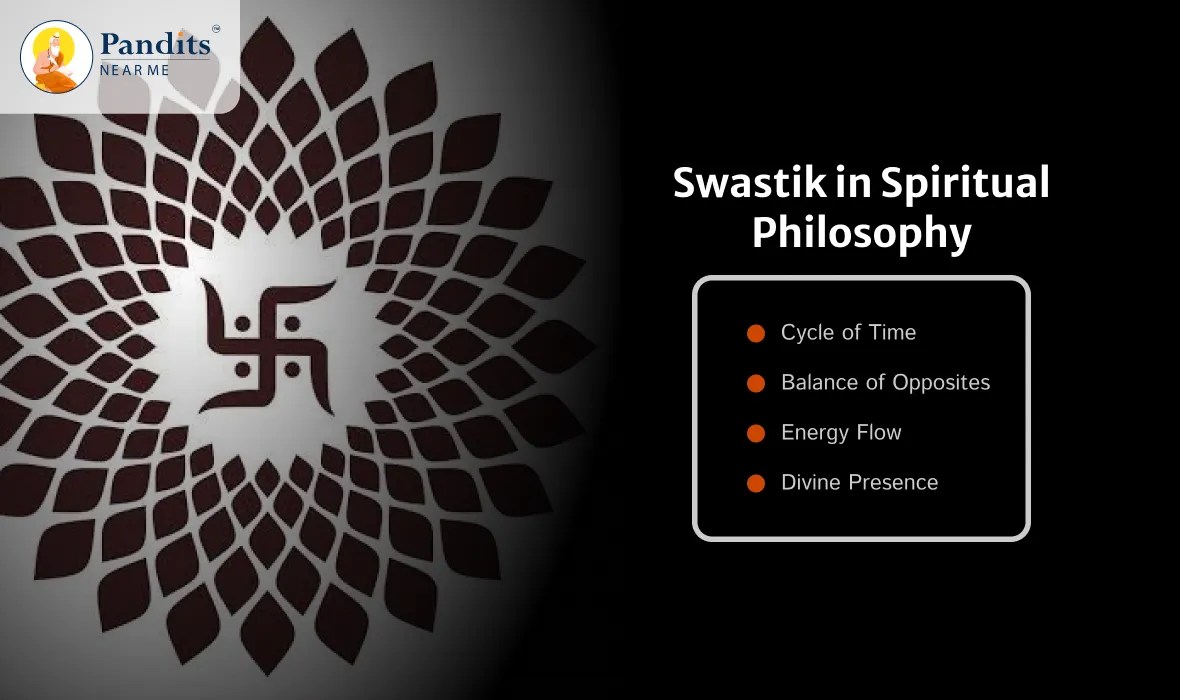
The Swastik symbol is not just a design: it holds deep spiritual wisdom. Let us see what it really means:
Cycle of Time: Did you ever notice how its arms turn forward relentlessly? They remind us of the endless cycle of life: creation, growth, and rebirth.
Balance of Opposites: Swastik reminds us of balance. Light and dark, beginning and end, the spiritual and the material all work together in harmony.
Energy Flow: You may not be aware that Swastik is believed to attract positive energy and negativity away from us. That's the reason it is called upon for festivals and pujas.
Divine Presence: Each Swastik carries with it the grace of gods like Saraswati, Vishnu, and Ganesha, gracing us with wisdom, protection, and prosperity.
The Swastika in the Vedas and Scriptures
The Vedas symbol of the Swastik, found in various Hindu scriptures, represents wealth and divine order. The Atharvaveda calls it a sign of auspiciousness, whereas the Rigveda links it with the path of the sun. In ritual practice, the Swastik is inscribed prior to the recitation of mantras to purify the area and attract cosmic forces.
It is also attributed to Lord Ganesha, the remover of obstacles. Numerous Hindus start their writings or ledgers with the auspicious symbol so that they may succeed and be protected from evil.
Swastik in Modern Life
Even today, the Swastika is everywhere; it is very much present in modern times as well. On houses and shops, temples and festivals, it's a welcome symbol of success.
Festivals: People create the Swastik sign on their doorsteps during Diwali, Navratri, and Ganesh Chaturthi to invite divine blessings.
Business: Merchants and shopkeepers place the Swastik mark on new account books to initiate the year with prosperity.
Architecture: The holy symbol appears in ornamentation and carvings in temples and even homes as a symbol of protection and prosperity.
Yoga & Meditation: Yogis meditate on the Swastik for balancing energy and conveying messages to higher consciousness.
Misinterpretation and Reclaiming the Swastik
It is easy to associate the Swastika with its misuse in the 20th century. But its initial purpose is entirely different and should be reclaimed. For Hindus, Buddhists, and Jains, the Swastik symbol has never been associated with hate but with harmony, prosperity, and good luck.
Swastik symbol, we can restore its noble status as a sacred Vedas symbol, a symbol of life, hope, and divine balance.
Conclusion
Swastik is the bridge between humans and the universe, representing the truth, equilibrium, and blessings of the divine. Therefore, when asked "What is the meaning of Swastik symbol?", the answer is simple: it is the emblem of well-being, prosperity, and cosmic harmony, honored throughout cultures but particularly valued as the Hindu Swastika.
Want to add the Swastik in your rituals in the correct way? Book your Puja with Pandits Near Me now and let our experienced pandits assist you in performing the Vedic rituals for prosperity, peace, and divine blessings.