









There is something deeply powerful about stories that transform that way we think, live, and connect with the divine. The Shiv Puran is one such timeless treasure, filled with intense devotion, cosmic mysteries, and life lessons that feel just as relevant today as they did centuries ago.
Tales such as creation and destruction to moments of pure surrender to Lord Shiva, every narrative carries an emotional and spiritual depth that pulls you in.
What is Shiva Puran?
The Shiv Puran is one of the most important sacred texts in Hinduism, dedicated to the glory, teachings, and divine stories of Lord Shiva. It is part of the 18 major Puranas and serves as a spiritual guide that combines mythology, philosophy, and devotion.
This ancient scripture narrates various aspects of Lord Shiva’s existence, and his role as the creator, protector, and transformer of the universe, along with detailed stories of his manifestations, family, and devotees. It also explains rituals, forms of worship, and the significance of living a righteous and dharmic life.
Beyond it, the Shiv Puran book offers deep insights into concepts such as karma, devotion, and liberation. It helps devotees understand not just who Lord Shiva is, but how his teachings can be applied in everyday life for spiritual growth and inner peace.
Who Wrote Shiv Puran?
The Shiv Puran book, like all other puranas in Hindu literature, was likely a living text, which was edited, recast, and revised routinely over a long period of time. The authorization of it is traditionally attributed to Sage Ved Vyasa, who is regarded in the Puranic tradition as the compiler/author of the major Puranas. Modern scholars treat the Maha Shiva Puran as a composite, evolving work reflecting Shaiva religious developments rather than the product of a single historical author.
Also Read This Article: Vishu Festival in Kerala 2026: Everything You Need to Know
Significance of Shiv Puran
The Maha Shiv Puran holds immense importance in Hinduism, as it explains the power, compassion, and cosmic role of Lord Shiva.
One of the key aspects of its significance is its accessibility across cultures and regions. Devotees can engage with it through versions like Shiv Puran Gujarati and Shiv Puran in Bengali. This regional connection allows people to deeply relate to the legends and teachings, strengthening their devotion.
Listening or reading the Shiv Puran book, whether as Shiv Puran Gujarati or Shiv Puran in Bengali, is believed to purify the mind and soul. It helps devotees overcome negativity, reduce the impact of past karmas, and move towards a more peaceful and spiritually aligned life.
Shiv Puran ki Katha
The Shiv Puran Katha is a collection of powerful divine tales that reveal the greatness, compassion, and cosmic role of Lord Shiva. These sacred narratives not only highlight His role as the destroyer and transformer in the universe but also offer deep spiritual lessons on devotion, karma, and liberation.
In recent times, the popularity of Pradeep Mishra Shiv Puran Katha Vachak has brought these timeless stories closer to modern audiences, making them more relatable and easier to understand. Through his engaging storytelling style, Pradeep Mishra Shiv Puran has helped devotees connect emotionally and spiritually with the essence of Shiv Puran ki Katha.
Here are some of the most important and popular legends from Shiv Puran ki Katha:
Creation of the Universe
The Shiv Puran book describes Lord Shiva as the ultimate reality, who is the beginning and the end of everything. Through Lord Shiva emerged the cosmic forces responsible for creation and preservation.
In one famous legend, Lord Vishnu and Lord Brahma argued about who was supreme. Suddenly, an infinite pillar of light appeared (Lord Shiva).
Lord Vishnu went downwards to find its end
Lord Brahma, similarly, went upwards
Neither deity could find the limit. It was the ultimate proof that Lord Shiva is infinite and beyond comprehension.
Story of Parvati and Sati
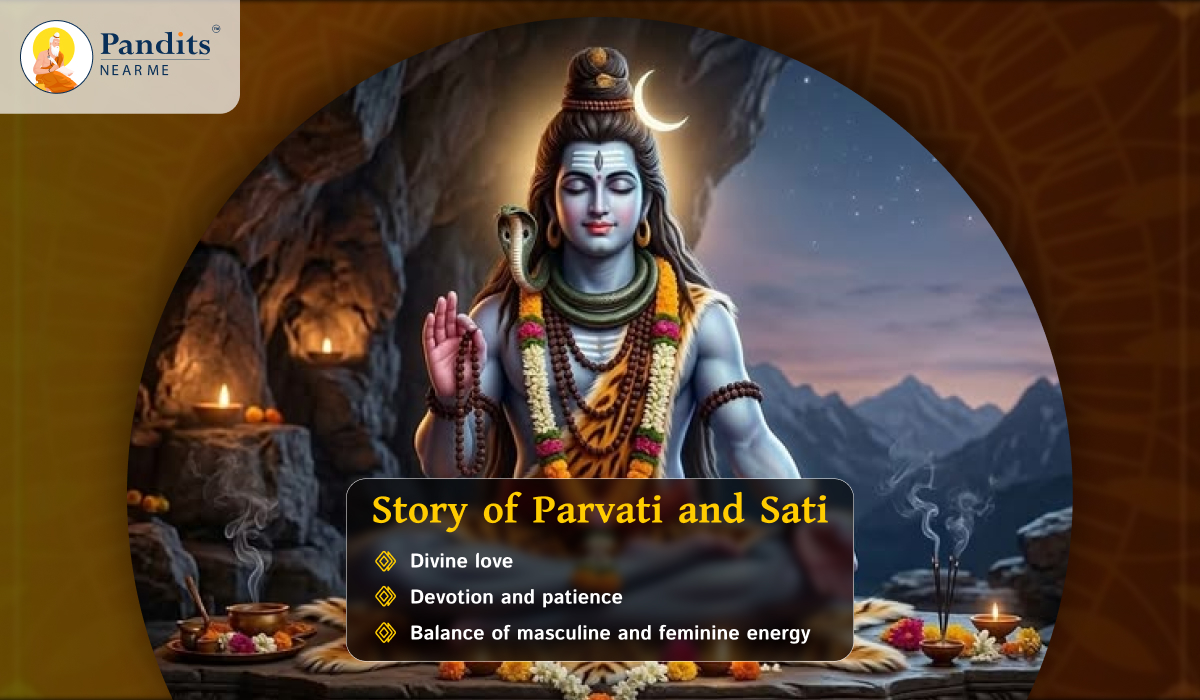
Lord Shiva’s ultimate consort first took birth as Sati, who got married to him against her father’s wishes. When, during a yagna, her father insulted Lord Shiva, Sati sacrificed herself in fire.
Later, she was reborn as Parvati, who performed intense penance to win Shiva back. Their union symbolizes:
Divine love
Devotion and patience
Balance of masculine and feminine energy
Samudra Manthan & Neelkand
In another legend from Maha Shiv Puran katha, during the great Samudra Manthan, a deadly poison emerged that had the potential to destroy the entire universe.
To save all beings, humans, demons, and gods, Lord Shiva drank the poison and held it in his throat, turning it blue and earning the name Neelkand.
The legend shows:
Shiva’s sacrifice
Protection of the universe
His role as the ultimate savior
Birth of Lord Ganesha
Once, Goddess Parvati created a boy from sandalwood paste, Lord Ganesha, to guard her.
When Lord Shiva tried to enter, Lord Ganesha stopped him. In anger, Shiva severed his head. Realizing the mistake, he replaced it with an elephant’s head and blessed him as:
The remover of obstacles
The first deity to be worshipped
Shiv Puran Samagri
To perform the Shiv Puran Shivratri Puja vidhi, you need to have the following samagri:
Shivling or Idol/Image of Lord Shiva
Kalash with coconut and mango leaves
Gangajal
Panchamrit
Bel Patra
Fruits and Flowers
Diya
Incense
Camphor
Shiv Puran book
Ghee
Shiv Puran Shivratri Puja Vidhi
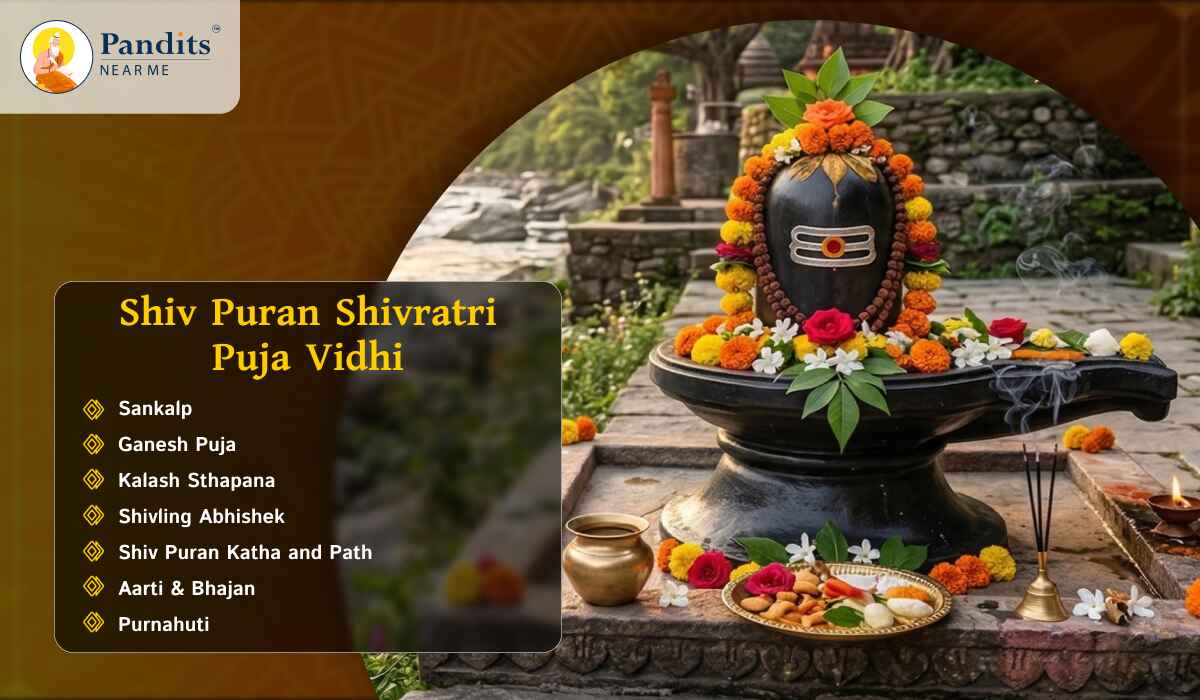
The Shiva Purana Pooja is usually performed under the guidance of a pandit. Here is how the puja vidhi usually goes:
Sankalp
Set up a chowki and place the Shivling or idol of Lord Shiva on it. Sit calmly and take a Sankalp, stating the purpose of performing the puja, such as peace, health, or prosperity.
Ganesh Puja
Start the puja by worshipping Lord Ganesha. This step is important to remove any obstacles and ensure the smooth completion of the puja.
Kalash Sthapana
Place a kalash filled with water, decorate it with mango leaves, and position a coconut on top. This symbolizes the presence of divine energy and invites positive vibrations into the space.
Shivling Abhishek
Perform the abhishek of the Shivling using water, Gangajal, and Panchamrit. Offer Bel Patra, flowers, and sandalwood while chanting “Om Namah Shivaya,” This step is considered highly powerful for purification and blessings.
Shiv Puran Katha and Path
Begin the recitation of Shiv Purana, where a pandit narrates divine stories and teachings of Lord Shiva. Devotees listen with devotion, absorbing spiritual knowledge. This recitation may continue for multiple days depending on the chosen duration.
Aarti & Bhajan
Perform aarti using diya and camphor, followed by singing bhajans dedicated to Lord Shiva. This creates a devotional atmosphere and strengthens the spiritual connection.
Purnahuti
Conclude the puja with final offerings and prayers. Seek forgiveness for any mistakes and express gratitude to Lord Shiva for his blessings. Distribute prasad among all participants.
Conclusion
The Shiv Puran is a guide to understanding life, devotion, and the deeper connection with Lord Shiva. Its teachings continue to inspire faith, inner strength, and spiritual clarity, helping devotees navigate both challenges and blessings with balance and surrender.
If you feel drawn to experience its true essence, performing a Shiv Puran Puja is a powerful step towards spiritual growth and divine blessings. Book a verified and experienced pandit through Pandits Near Me for Shiv Puran Puja and bring the sacred energy of Lord Shiva into your home.