










Rath Yatra 2026 is one of the most significant Hindu festivals, celebrated with immense devotion in honor of Lord Jagannath. Also known as Jagannath Puri Rath Yatra 2026, the festival commemorates the annual journey of Lord Jagannath, along with Lord Balabhadra and Devi Subhadra, from the Jagannath Temple to the Gundicha Temple in Puri, Odisha. This sacred procession symbolizes the Lord’s divine visit to His devotees and represents compassion, unity, and inclusivity.
In this guide, we’ll explore everything you need to know about the Rath Yatra, including its dates, history, significance, rituals, the famous three chariots, and where the festival is celebrated. Whether you’re visiting the celebrations or observing the festival at home, this article will help you understand the traditions and spiritual importance of this auspicious occasion.
What is Rath Yatra?
For people who are asking “what is Rath Yatra”, it is a sacred Hindu festival that is dedicated to Lord Jagannath, an incarnation of Lord Vishnu, and is celebrated with great devotion across India. During this annual festival, Lord Jagannath, along with his elder brother Lord Balabhadra and sister Devi Subhadra, is taken out of the Jagannath Temple in Puri on magnificent wooden chariots and carried to the Gundicha Temple. The journey symbolizes the Lord’s desire to leave His temple and bless all devotees, making His divine presence accessible to everyone.
Many devotees often ask, “Rath Yatra kab hai?” The festival is observed every year on the Dwitiya Tithi of the Shukla Paksha in the Hindu month of Ashadha, which usually falls in June or July. The exact date varies each year according to the Hindu lunar calendar.
Beyond its grand procession, Rath Yatra represents devotion, equality, and spiritual unity. Millions of devotees gather to pull the sacred chariots, believing that participating in this divine journey brings blessings, removes obstacles, and leads to spiritual merit.
Rath Yatra 2026 Start Date and End Date
Jagannath Rath Yatra 2026 falls on Thursday, July 16, 2026.
| Snan Yatra (Sacred Bath Festival) | June 29, 2026 |
| Anasara Begins (15-day period of Sacred Seclusion) | June 30, 2026 |
| Ashadha Shukla Dwitiya (Tithi) Begins | July 15, 2026 - 11:50 AM |
| Ashadha Shukla Dwitiya (Tithi) Ends | July 16, 2026 - 8:52 AM |
| Gundhica Marjan (Temple Cleaning) | July 15, 2026 |
| Main Rath Yatra (Chariot Procession) | Thursday, July 16, 2026 |
| Bahuda Yatra (Return Journey) | Friday, July 24, 2026 |
Also read this blog: Krishna Janmashtami 2026: Date, Puja Timings, Rituals & Celebration Guide
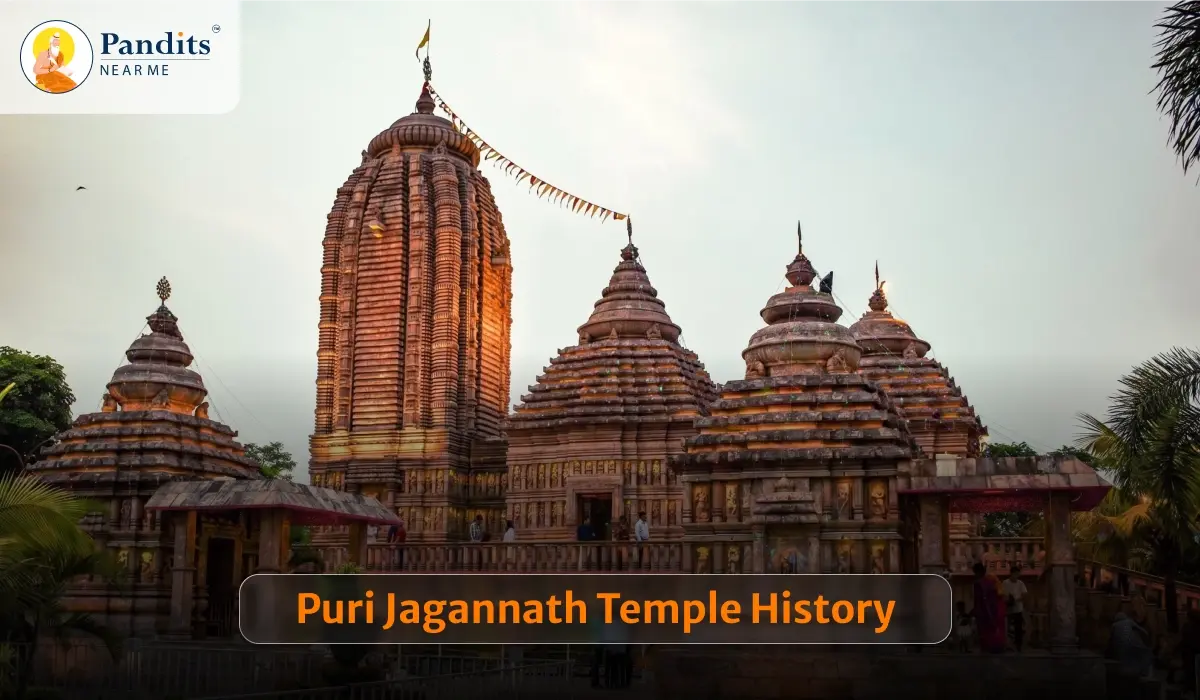
According to the Puri Jagannath Temple history, it is one of the most sacred Hindu pilgrimage sites and an important part of India's spiritual heritage. Located in Puri, Odisha, the temple is believed to have been built during the 12th century by King Anantavarman Chodaganga Deva of the Eastern Ganga dynasty. Dedicated to Lord Jagannath, a revered form of Lord Vishnu, the temple also houses the deities of Lord Balabhadra and Devi Subhadra.
According to Hindu traditions, the worship of Lord Jagannath in Puri dates back well before the temple itself. Ancient legends describe King Indradyumna as the first ruler to establish the worship of Lord Jagannath after receiving divine guidance. Over the centuries, the temple became a major center of devotion and pilgrimage, attracting saints, scholars, and devotees from across the country.
The temple is also one of the four sacred Char Dham pilgrimage sites, alongside Badrinath, Dwarka, and Rameswaram. Its unique traditions, architectural grandeur, and centuries-old rituals have made it a symbol of faith for millions. Today, the temple is best known as the spiritual heart of the world-famous Jagannath Puri Rath Yatra 2026, during which Lord Jagannath, Lord Balabhadra, and Devi Subhadra embark on their annual chariot procession through the streets of Puri.
Significance of Jagannath Rath Yatra
The significance of Jagannath Rath Yatra lies in its message of devotion, equality, and divine compassion. Unlike most Hindu festivals, where devotees visit the temple, Rath Yatra symbolizes Lord Jagannath stepping out of His sanctum to bless everyone, including those who may not be able to enter the temple. This act reflects the belief that the Lord’s grace is available to all, regardless of caste, community, or social status.
The festival also commemorates Lord Jagannath’s annual journey to the Gundicha Temple, believed to be the home of His aunt. This sacred visit represents love, renewal, and the bond between the Lord and His devotees. The grand procession, accompanied by devotional music and chants, creates an atmosphere of spiritual joy and unity.
Three Chariots of Rath Yatra
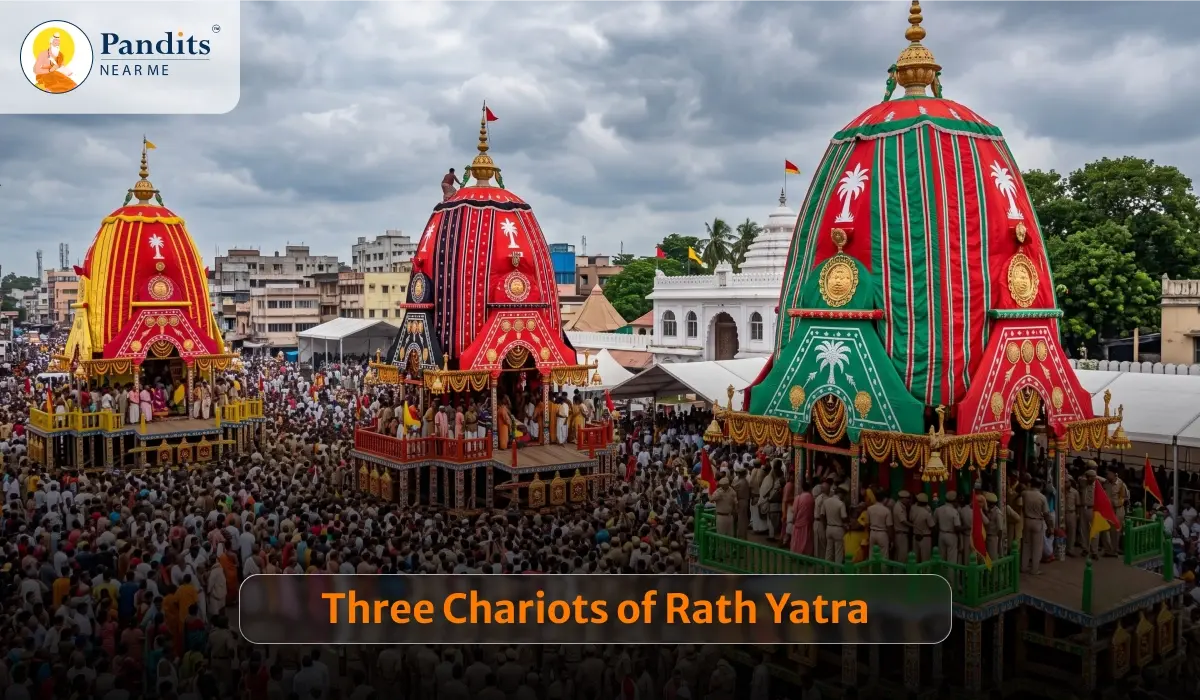
One of the most iconic aspects of Rath Yatra is the procession of the Three Chariot of Rath Yatra, each specially constructed every year using traditional techniques and sacred wood. These beautifully decorated chariots carry Lord Jagannath, Lord Balabhadra, and Devi Subhadra from the Jagannath Temple to the Gundicha Temple in Puri. Every chariot has its own name, color, size, and symbolic significance.
| Chariot | Deity | Canopy Colors | Number of Wheels |
| Nandighosha | Lord Jagannath | Red and Yellow | 16 |
| Taladhwaja | Lord Balabhadra | Red and Green | 14 |
| Darpadalana | Devi Subhadra | Red and Black | 12 |
Rath Yatra 2026 Rituals
The Rath Yatra 2026 rituals begin several days before the grand chariot procession and continue until the deities return to the Jagannath Temple. Each ritual holds deep spiritual significance and has been followed at the Jagannath Temple in Puri for centuries.
Snana Purnima
The festivities begin with Snana Purnima, when Lord Jagannath, Lord Balabhadra, and Devi Subhadra are ceremonially bathed with 108 pots of sacred water. After the ritual, the deities are believed to fall ill and are kept away from public view.
Anavasara
Following Snana Purnima is the Anavasara period, during which the deities remain in seclusion for about 15 days. During this time, devotees are unable to have darshan, as the deities are believed to be recovering.
Gundicha Yatra (Rath Yatra)
The main day of Rath Yatra marks the journey of the three deities from the Jagannath Temple to the Gundicha Temple on their beautifully decorated wooden chariots. Thousands of devotees gather to pull the chariots, considering it a highly auspicious act.
Hera Panchami
Observed a few days after the procession, Hera Panchami commemorates Goddess Lakshmi’s symbolic visit to the Gundicha Temple in search of Lord Jagannath, highlighting a unique and cherished temple tradition.
Bahuda Yatra
Also known as the Return Journey, Bahuda Yatra marks the return of the deities from the Gundicha Temple to the Jagannath Temple. Like the outward journey, it is celebrated with immense devotion.
Suna Besha
After returning to the temple, the deities are adorned with magnificent gold ornaments during Suna Besha. Thousands of devotees gather to witness this spectacular royal appearance.
Niladri Bije
The festival concludes with Niladri Bije, when Lord Jagannath, Lord Balabhadra, and Devi Subhadra re-enter the Jagannath Temple. This ritual marks the official end of Rath Yatra and symbolizes the completion of the divine journey.
Where is Rath Yatra Celebrated?
While Puri, Odisha, hosts the most famous Rath Yatra, the festival is celebrated with great enthusiasm in many cities across India and around the world. Some of the most prominent celebrations include:
Puri, Odisha: Home to the world-famous Jagannath Rath Yatra and the largest gathering of devotees.
Ahmedabad, Gujarat: One of India's oldest and biggest Rath Yatra celebrations outside Puri.
Surat, Gujarat: A grand procession featuring beautifully decorated chariots, devotional music, and thousands of devotees.
Mumbai, Maharashtra: ISKCON temples and local communities organize vibrant Rath Yatra processions every year.
Delhi: The capital hosts large-scale celebrations led by ISKCON and Jagannath devotees.
Bengaluru, Karnataka: Thousands participate in colorful chariot processions and cultural programs.
Hyderabad, Telangana: Rath Yatra is celebrated with devotional events, bhajans, and community gatherings.
ISKCON Rath Yatra Kolkata: One of the city's most popular spiritual events, attracting devotees with grand processions, kirtans, and cultural performances.
Chennai, Tamil Nadu: Temples dedicated to Lord Jagannath organize special pujas and Rath Yatra festivities.
International ISKCON Temples: Rath Yatra is also celebrated in cities across the USA, UK, Canada, Australia, and many other countries, spreading Lord Jagannath's message of devotion and unity worldwide.
Book a Pandit for Jagannath Puja at Home
Celebrate the divine blessings of Lord Jagannath with a traditional puja performed by experienced Vedic pandits. Whether you're observing Rath Yatra 2026 with your family or seeking spiritual guidance, Pandits Near Me makes it simple to Book a Pandit for Jagannath Puja at Home.
Our verified pandits perform the puja according to authentic Vedic traditions, ensuring every ritual is conducted with devotion and precision. From sankalp and mantra chanting to aarti and prasadam, you can experience a complete Jagannath Puja without leaving your home.
With Pandits Near Me, you can enjoy:
Verified and experienced Vedic pandits
Puja services in your preferred language
Convenient online and home booking
Step-by-step guidance for devotees
Assistance with the required puja samagri
Transparent pricing with hassle-free scheduling
Invite the blessings of Lord Jagannath, Lord Balabhadra, and Devi Subhadra into your home this Rath Yatra. Book your Jagannath Puja today with Pandits Near Me and celebrate this sacred festival with faith, tradition, and peace of mind.