










Introduction
Among the many holy books in Hinduism, the Ramayana holds immense spiritual and mythological importance. Besides being an epic, it is more than a book, a spiritual text that represents dharma (righteousness), and thus a sacred source of divine guidance. Of the seven parts or "kaands" of the Ramayan, the Sundar Kand is believed to be the most spiritually strong. It is a narration of the story of Lord Hanuman's journey to Lanka to find Sita Mata which is filled with devotion, courage, intelligence, and divine service.
Reciting or listening to the Sunderkand Paath is known to remove negativity, bring peace, and invoke the blessings of Lord Hanuman. In this blog, we’ll learn about the true essence of Sundar Kand, the meaning of Hanuman Ji’s Chaupai, the spiritual connection with Narayan Nagbali Puja, and how one can benefit from the divine vibrations of this sacred paath.
What is Sundar Kand?
Before we get into the details, let us first understand what is Sundar Kand. It is the fifth chapter of the Ramayan written by great sage Valmiki in Sanskrit and later it was beautifully translated in Awadhi language by Goswami Tulsidas in his devotional book Ramcharitmanas. The term "Sundar Kand" means "the beautiful chapter." But what makes it beautiful?
Why is it called "Sundar"?
It portrays unique qualities of Lord Hanuman, especially his unconditional devotion, bravery, humility, and intelligence.
It includes the divine and optimistic conversation between Hanuman Ji and Sita Mata.
It features beautifully written verses, chaupais, and dohas that uplifts the soul and fill the mind with devotion.
Thus, it’s not just beautiful from the language perspective but also aces in spiritual essence.
Major Events in Ramayan Sundar Kand

The Ramayan Sundar Kand is entirely based on Lord Hanuman’s mission to search Sita Mata in Lanka. The following are the major events:
Lord Hanuman’s Leap across the Ocean: Hanuman Ji miraculously leaps across the ocean to reach Lanka, showcasing sheer courage and faith.
Defeating Demons: On his way, Hanumanji is obstructed by demons. He defeats all those demons, including Surasa, Simhika, and Lankini.
Meeting Sita Mata: After consistent efforts, Hanuman Ji finds Sita Mata in the Ashoka Vatika, he reassures her, and gives Lord Rama’s ring as a symbol of hope.
Message to Ravana: After conveying Lord Rama’s message, Hanumanji asks Ravana to surrender and release Sita Mata with respect.
Burning Lanka: Hanumanji on Ravana’s order was captured and his tail was set on fire. In response, Hanumanji burns down Lanka, showing divine power and righteousness.
Returning to Lord Rama: Hanumanji then returns with Sita Mata’s message, which strengthened Rama’s resolve to conquer irrespective of pride and power of Ravana.
These events show both physical and spiritual strength—the true power of devotion.
The Power of Sunderkand Paath
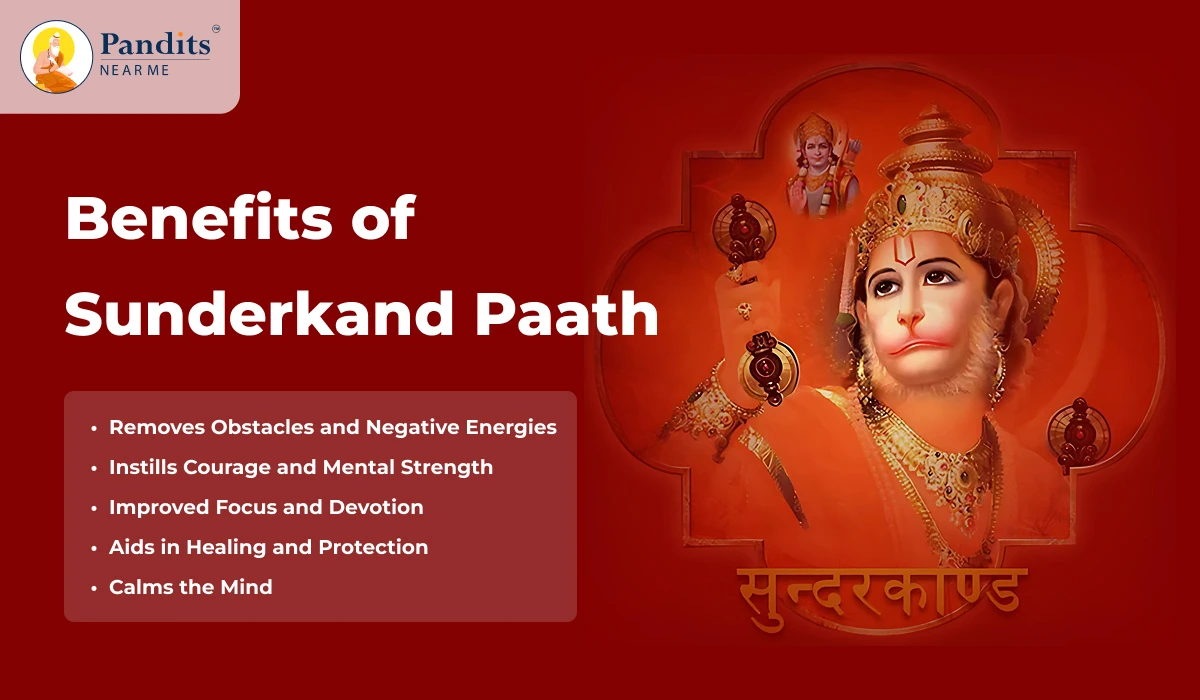
The Sunderkand Paath holds immense spiritual value and power. Devotees often recite it during times of distress, fear, or confusion. As Lord Hanuman crossed a huge sea, earlier seeming impossible to leap, to instill hopes in Lord Rama’s army, his devotees believe that similarly, the Sunderkand can help overcome any obstacle in life.
Benefits of Sunderkand Paath:
Removes Obstacles and Negative Energies: Popularly known as Sankatmochan, Hanumanji is called the remover of troubles. Regular reading of the Sundar Kand removes obstacles in personal, professional, and spiritual life.
Instills Courage and Mental Strength: Reading sincerely about Lord Hanuman’s bravery instills confidence and fearlessness among devotees.
Improved Focus and Devotion: The verses help the mind to focus and increase bhakti (devotion).
Aids in Healing and Protection: It is believed that the vibrations from the paath promote good health and protects one from evil energies and black magic.
Calms the Mind: The rhythm of the chaupais helps reduce anxiety and stress thereby calming the mind.
Whether recited alone, in a family gathering, or in a temple, the sunderkand paath creates an environment of positivity and divine energy.
Also read this article: What is Narayan Bali Pooja? Rituals, Significance & Complete Guide
Sunderkand Chopai: Hanuman Ji’s Chaupai and Its Meaning
The Sundar Kand Chopai is sacred divine couplets that reflect Lord Hanuman’s character and his unwavering devotion to Lord Rama.
Most Famous Hanuman Ji Chaupai:
“Bhoot pishach nikat nahi aave,
Mahabir jab naam sunave.”
Meaning: When one chants the name of Lord Hanuman, evil spirits and negative forces cannot come near. This chaupai is often recited to protect oneself from fear, nightmares, or negativity.
These chaupais are simple yet extremely powerful. Reciting them daily can serve as spiritual protection.
Sunderkand vs Hanuman Chalisa
| Differentiator | Hanuman Chalisa | Sundar Kand |
| Content Type | 40 Chaupais, short verses | Detailed storytelling and dialogue |
| Purpose | Daily prayer, protection, devotion | Deep spiritual cleansing, strength and courage |
| Ideal For | Beginners in bhakti path | Serious spiritual seekers |
| Duration | 5-10 minutes | 60-90 minutes |
| Language | Awadhi (by Tulsidas) | Awadhi (Ramcharitmanas) |
Both are powerful, but sunderkand paath holds deeper layers of spiritual and mental transformation.
Spiritual Connection: Sunderkand and Narayan Nagbali Puja
While the Sunderkand is known to help cleanse your aura and strengthen your energy, certain ancestral doshas or karmic blocks may still need powerful Vedic rituals like the Narayan Nagbali Puja. The following are the benefits of conducting both practices together:
It helps in relieving Pitru Dosh and unresolved ancestral karmas.
Devotees are often suggested to recite Sunderkand during or after such rituals to maintain spiritual energy and peace.
When done together, these practices bring holistic healing for body, mind, and ancestral lineage.
The Narayan Nagbali Puja cost may vary between Rs.5,000 to Rs.25,000 depending on the pandit and temple.
Looking for professional pandits to conduct Sunder kand paath, hanuman chalisa paath or narayan nagbali puja? Connect with our experts to get it done at your desired place under budget.
How to Perform Sunderkand Paath at Home
Performing the Sunderkand Paath at home can be done in simple steps with devotion and purity.
Essential Items for doing Sunder Kand:
A clean and quiet place
A picture or idol of Hanuman Ji
A copy of Ramcharitmanas
Ghee lamp, incense, prasad (fruit/sweets)
Steps:
1. Clean the space and light the diya.
2. Offer flowers and chant the Hanuman Chalisa or Om Hanumate Namah.
3. Start reciting the Sundar Kand with concentration.
4. Maintain a meditative mindset and visualize Hanuman Ji’s journey.
5. Offer prasad and aarti at the end.
If you’re unable to read the text, you can listen to audio versions or join online live Sunderkand sessions.
When and Where to Recite the Sundar Kand?
Tuesdays and Saturdays: Most auspicious for Hanuman devotees
Purnima or Amavasya: Energetically charged days for transformation
New ventures: Seeking blessings for success of new venture
Personal crises: Facing crises related to Health, legal, or emotional issues
Sundar Kand Paath at Popular temples:

One can even conduct Sunder Kand paath at popular temples across the country. These includes
Sankat Mochan Mandir, Varanasi
Salasar Balaji, Rajasthan
Hanuman Mandir, Connaught Place, Delhi
Real-World Applications of Sunderkand Paath
The power of sunderkand is known to all and hence its practice across generations. Devotees recite it:
In chat applications or social groups sharing Sundar Kand every week
During housewarming ceremonies and grah dosh removal
For student success, career growth, and mental health
During Navratri, Hanuman Jayanti, and other auspicious days
Conclusion
The Ramayan Sunda Kand is a journey into divine love, power, and protection. Its verses are not only poetic but mystical, its impact is deeply transformational. Whether you’re reading it for the first time or reciting it daily, it brings light into darkness, clarity into confusion, and strength into weakness.
If you’re struggling in life or seeking deeper spiritual peace, start with a single Sundar Kand Chopai today. Let Hanuman Ji guide your journey with his boundless energy and love.
Let your life be filled with the grace of Hanuman Ji. For personalized paath services, spiritual counseling, or Narayan Nagbali Puja cost guidance, contact our team at Pandits Near Me today.