





MahaShivratri, a highly sacred Hindu festival, is commemorated with faithful devotion and prayer to Lord Shiva. The sacred day is spiritually uplifting and is celebrated by millions across India and the world. Unlike the other festivals where they are celebrated with zest and feast, Maha Shivratri is a day of fasting, meditation, prayer and to feel the divine energy of Shiva.
All wonder, "why is Shivratri celebrated?" or "what is Shivaratri?". To know more about the importance of this festival, let's know its date, religious importance, ancient mythology, and rituals.
What is Shivaratri?
To begin with, let us deal with the most basic question: what is Shivaratri?
Shivratri is the "Great Night of Shiva". Unlike all other festivals, it is a night festival and symbolizes victory over darkness and ignorance in life. There is a Shivratri every month, but MahaShivratri is the biggest of them all, and that occurs annually in the Hindu month of Phalguna (February–March).
This holy night is where the energies of the universe are most in balance, so rituals like meditation, fasting, and reciting "Om Namah Shivaya" are actually strong.
Why is Shivratri Celebrated?
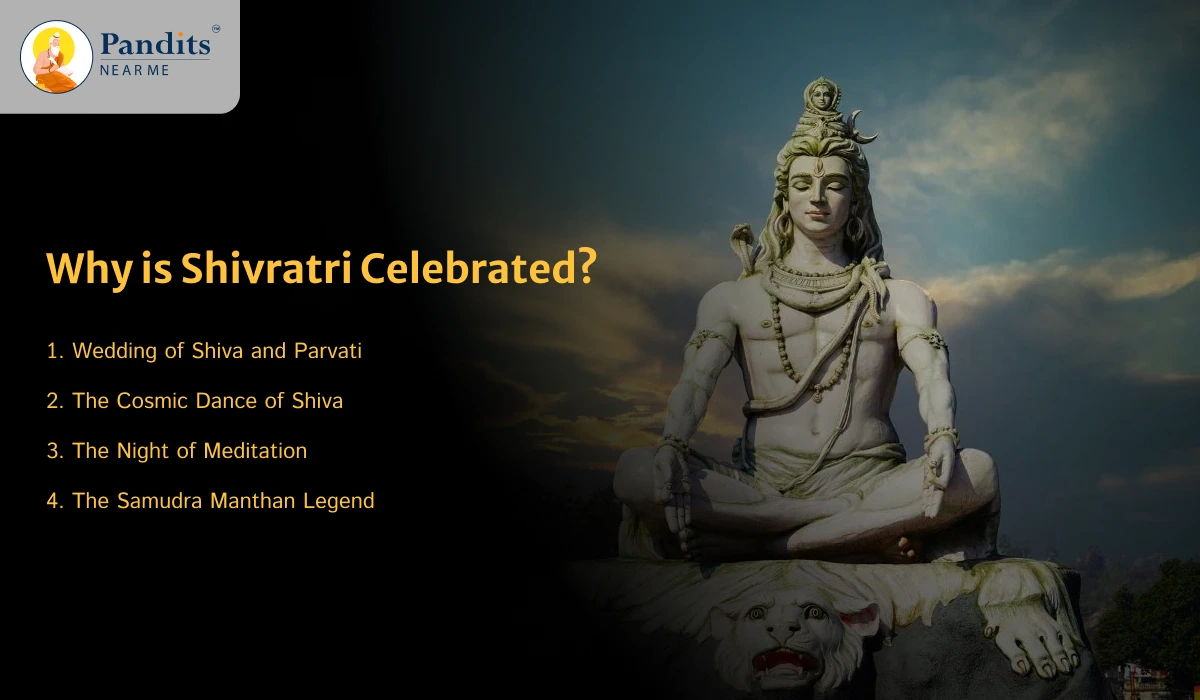
The question "why we celebrate Shivratri" has several interpretations in Hindu scriptures. Most of the celebration is about Lord Shiva and symbolizes the victory of light over darkness. The followers believe that fasting and puja on this day help in eliminating past sins, fulfilling wishes, and leading to moksha (spiritual liberation).
Most people also ask, "Why Shivaratri is celebrated?" or "Why is Mahashivaratri celebrated?". Below are the reasons:
1. Wedding of Shiva and Parvati – The legends say that this night saw the heavenly marriage ceremony of Lord Shiva and Goddess Parvati. So, couples receive blessings for a happy and prosperous wedding.
2. The Cosmic Dance of Shiva – Sacred texts state that at Maha Shivratri, Shiva performed the Tandava Nritya, a creation, preservation, and destruction dance.
3. The Night of Meditation – Through staying awake and meditating on this night, ignorance is destroyed and higher consciousness is revived.
4. The Samudra Manthan Legend – It is said in another Maha Shivratri legend that when poison (halahala) came forth during the churning of the ocean, Shiva consumed it to save the world. The followers have great reverence for this selfless sacrifice by observing fasts and sprinkling water over the Shivling.
The Shivratri Story – Ancient Legends
There are various Shivratri story variations in different scriptures, with each highlighting a different feature of Lord Shiva's greatness:
- The Hunter's Devotion – There is a popular tale of how a hunter unwittingly put bilva (bel) leaves on a Shivling while keeping guard for prey under a tree. He did not know that he performed the Shiva puja, and Lord Shiva gave him salvation.
- Triumph of Devotion – Another Maha Shivratri legend speaks of a poor man who worshiped a Shivling throughout the night. His modest show of devotion pleased Shiva, who granted him emancipation.
- Union of Shiva and Shakti – The day also commemorates the period when Shiva and Shakti came together, an indication of peace in the world.
These timeless stories assign utmost significance to devotion, celibacy, and selflessness in a religious life.
Date of MahaShivratri 2026
Maha Shivaratri 2026 will be observed on Sunday, February 15, 2026.
The festival date is determined according to the Hindu lunar calendar and falls on the 14th night of the dark half (Krishna Paksha) of Phalguna.
Maha Shivratri Rituals
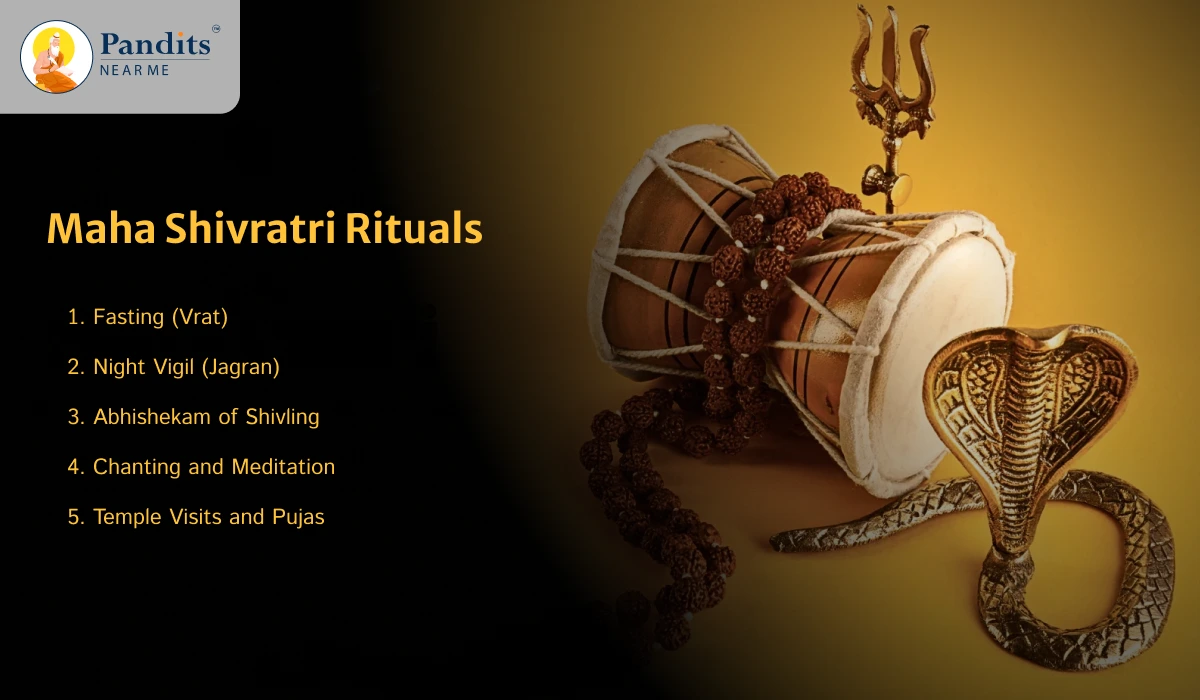
Maha Shivratri rituals are symbolic and special. In contrast to other festivals involving large meals, sweets, and ornaments, Shivratri is devoted to discipline, simplicity, and purification of the inner self.
Here are the major rituals done by devotees:
1. Fasting (Vrat)
Devotees keep a complete fast with only fruits and water or, occasionally, without food or water at all (nirjala vrat). Fasting symbolizes control over desires and dedication to spiritual growth.
2. Night Vigil (Jagran)
Staying awake during the night is also a significant practice. Devotees chant mantras like "Om Namah Shivaya" and bhajans with their minds centered on the divine.
3. Abhishekam of Shivling
The Shivling is bathed with milk, honey, ghee, and sacred water. Bael leaves, dhatura, sandalwood paste, and flowers are offered. All of these have symbolic meanings: purity, devotion, and surrender.
4. Chanting and Meditation
Reciting the Maha Mrityunjaya Mantra or "Om Namah Shivaya" is believed to purify the mind, protect from evil, and provide divine favors.
5. Temple Visits and Pujas
Devotees visit Shiva temples, attend exclusive pujas, and perform rudrabhishek. Some even make pilgrimages to holy Jyotirlingas like Kashi Vishwanath, Somnath, and Kedarnath.
Also read this article: Rin Mukteshwar Mahadev Ujjain
Significance of MahaShivratri
Maha Shivratri is not just a religious holiday but a spiritual journey. The significance lies in the faith that on this night, Shiva's energy is closest to the planet. Harmonizing with this cosmic energy, the believers can:
- Clean the body and mind.
- Gain absolution for previous actions.
- Gain strength, peace, and divine insight.
- Move closer towards moksha or freedom.
For yogis and meditators, Shivratri is the most powerful night for spiritual awakening
Regional Celebrations of Maha Shivratri
Varanasi (Kashi Vishwanath Temple): The followers take part in grand Shiva-Barat processions and stay up chanting "Har Har Mahadev."
Ujjain (Mahakaleshwar Jyotirlinga): The renowned Bhasma Aarti is performed, followed by night-long bhajans and kirtans.
Kashmir (Herath Festival): Kashmiri Pandits at home pray with walnuts, milk, and flowers, symbolizing prosperity and wedded bliss.
South India (Chidambaram & other temples): All-night vigils include bhajans, music, and dance in honor of Lord Shiva's cosmic dance.
Nepal (Pashupatinath Temple): Thousands of sadhus gather, chanting mantras and performing rituals, attracting devotees from all around the globe.
Famous Temples in India: Kedarnath, Somnath, Amarnath, and Lingaraj temples witness Rudrabhisheks, special pujas, and massive gatherings.
MahaShivratri Around the World
Hindus all over the world observe Shivratri with the same fervor. From India and Nepal to Mauritius, Indonesia, Fiji, and the USA, temples are decorated on this holiest of nights. The fact that this festival is universal indicates how the message of Shiva transcends culture and geography.
Conclusion
The world has a lot of festivals, but Mahashivratri is unique in the sense that it is less about external celebrations and more about internal transformation. From enquiring "why we celebrate Shivaratri " to the age-old Mahashivaratri story, the devotees are taught profound spiritual lessons on their journey towards Lord Shiva. This sacred night teaches us that faith is less about elaborateness, meditation, and complete surrender.
As we approach Maha Shivaratri 2026, prepare to be blessed by the divine in the form of genuine prayers and proper rituals. And if you wish to worship on this sacred day with complete devotion and authentic Vedic rituals, book your Shivratri Puja offline or online with Pandits Near Me. Our pandits will guide you through each step from sacred offerings to powerful mantras to make your worship close to Lord Shiva Maha Shivratri's divine power.