




While death is one of life’s most important aspects, it is also considered to be its greatest mystery. Multiple religious texts have attempted to shed light on the afterlife and offer insights into a soul’s spiritual journey. The Hindu text known as the Garuda Puranam Book explores the intricacies of what happens to soul after death in Hinduism, and the consequences of one’s actions during one’s earthly existence.
In this blog, let’s examine the teachings of the Garuda Puranam, also known as Garun Puran or Garur Puran, to understand the concepts of life after death, past karma, ghostly life and subtle body, and the life lessons we can learn from Garud Puran Katha.
Garud Puran Katha: The Legend
What is Garuda Purana? The Garuda Puranam is one of the mythological epics, depicting an exchange of dialogue between Lord Vishnu and Garuda, the king of birds. It discusses death, rebirth, and what happens to soul after death in Hinduism. Moreover, Lord Vishnu and Garuda discuss topics such as sin, virtue, heaven, hell, and the afterlife.
It is auspicious if you read the Garud Purana after death of a loved one or during the twelves days of mourning. That is because Garud Path after death provides knowledge about the concepts of rebirth and funeral rituals. While the Garud Puran Katha was originally composed in Sanskrit, it is now available in multiple languages, all of 15,000 verses, that are divided into several parts.
What Happens to Soul After Death in Hinduism?
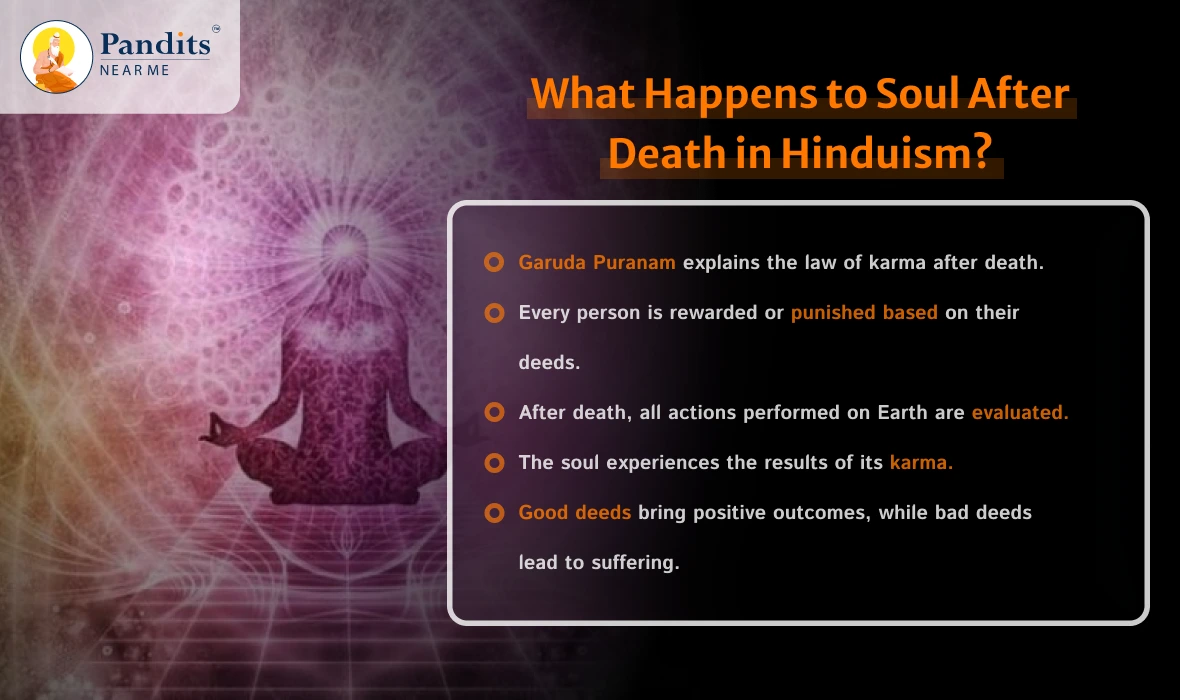
According to Garusa Puranam, or known by some as Garur Puran or Garun Puran, a person should be rewarded for their good and bad deeds. After a person dies, their deeds on earth are accounted for.
The Garud Path also states that hell is the same for all beings, either rich or poor. It describes a total of 84 hells, but only 21 of them are designated as one. In hell, all the Yamadutas (messengers of death) all combine to punish humans for their actions on earth.
| Tamisra | Those who attempt to take possession of another person’s property through robbery or theft are beaten with iron rods in hell under the punishment of Tamisra. |
| Worm Food | Those who take advantage of others for personal gain and insulting visitors are punished by eating worms. |
| Mahavichi | Those who kill cows will suffer the torture of superstition. There are large iron thorns on each side that have thunderbolt-like barbs. They are used to stab as punishment. |
| Raurava | Anyone who gives a false testimony will be punished by being stabbed with burning iron arrows. |
| Manjush | Those who imprison or chain another person on earth will be punished using molten iron. |
| Andhakupam | Those who have great wealth but not help others will be left in front of a wild animal or thrown into a well where dangerous creatures like lion, tiger, eagle, snake, and scorpion live. |
| Disgrace | Those who oppress or harm virtuous people will be placed in the netherworld, which is littered with vomit and feces. |
| Mahaprabha | Those who are destructive to their homes will be wrapped in a huge iron spike. |
| Villefac | Brahmins who consume alcohol will be sent to a place called vilefac, which never stops burning. |
Also read this article : Vivah Yog in Kundali
What is Ghostly Life?
The Garud Path describes ghosts as beings who have surpassed their material bodies but are bound by their earthly body. Entities that remain in this state often experience disturbance due to unfulfilled expectations or unresolved connections.
What is a Subtle Body?
The subtle body, also known as Sookshma Share, is what links the soul to the human universe. It clears the way of mental operations and sensory experiences by uniting the mind, intelligence, and false ego. According to the Garud Puran Katha, the soul travels to other worlds through the subtle body after death. It keeps the effects of past karma intact and moulds the soul’s path to upcoming births according to its attachments and wants.
Life Lessons from the Garud Path
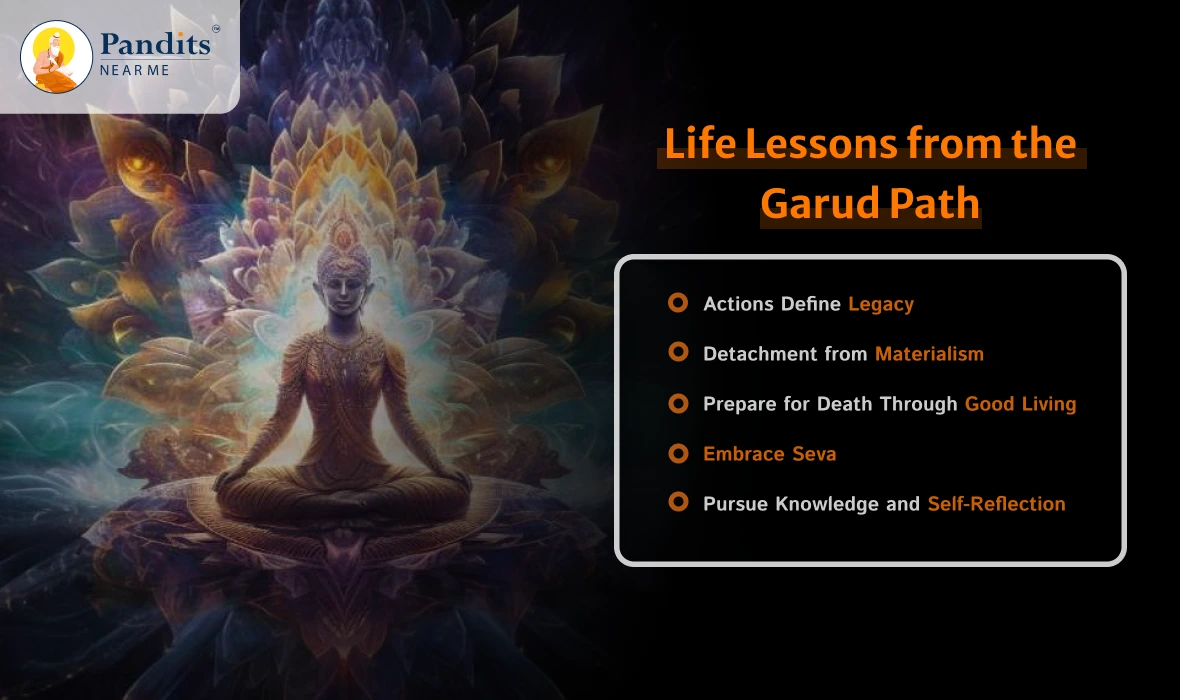
Because the Garud Puran Katha is vast, you can find countless lessons from it. But today, let’s discuss Garuda Puranam life lessons that can be applied to a modern civilization:
1. Actions Define Legacy
The Garuda Purana after death katha emphasizes that it is our actions and not wealth or lineage that defines us. Actions like helping others, staying honest, and living modestly are seen as the path to inner peace and leaving behind a meaningful legacy.
2. Detachment from Materialism
Both wealth and pleasure are fleeting. The Garuda Puranam urges readers to use resources wisely but not cling to them. It puts emphasis on practicing balance, earning righteously while giving back generously.
3. Prepare for Death Through Good Living
An element that is unique to the Garud Path is its extensive discourse on death and afterlife. Rather than fearing death, it instructs us on preparation through ethical conduct, generosity, and spiritual awareness.
4. Embrace Seva
Serving others, especially the elders and the vulnerable, is praised as a sacred duty in the Garuda Puranam. Practicing compassion like caring for the elderly, volunteering, and more, becomes a way to fulfil one’s dharma.
5. Pursue Knowledge and Self-Reflection
True wisdom is gained through introspection and study. The Garud Path encourages us that reading sacred texts, meditating, and associating with scholars and wise individuals will elevate our consciousness.
Conclusion
The Garuda Puranam explores the mysteries of life, death, and the afterlife while examining what happens to soul after death in Hinduism. It teaches us that life goes beyond the material world. With its rich insights into ethical behavior, Karma, Death, and relationships, it helps us in living more wisely and peacefully. Embracing its lessons today can offer spiritual clarity and emotional resilience for tomorrow.
If you want to organize the Garud Puran Katha & Puja at your home,book an experienced Pandit with Pandits Near Me.