


If you're feeling unlucky or an astrologer has said you have "Sarpa Dosha" in your horoscope, you have probably heard about the Ashlesha Bali pooja. For many people, particularly those in South India, it's more than just a ritual; it’s a process of achieving a new beginning.
The most recognised location for this is Kukke Subramanya for Ashlesha Bali Pooja, where many people attend each month. For newcomers, there can be a lot of information about names and rules to take in. This blog simplifies this process so that you understand what is going to happen, why you are doing it and how you will get ready for it.
What is Ashlesha Bali Pooja?
Let's start by looking at the name itself: Ashlesha Bali Pooja is offering (bali) made on the day of the Ashlesha nakshatra (an astrological indication of a specific star) in the lunar calendar.
Nagas are viewed as powerful spiritual beings that serve to protect the planet and our families by being guardians of the earth. In our belief system, if we have, or our ancestors have harmed nature and/or snakes, this gives rise to cultural debt somewhere in the lineage. This cultural debt often manifests in the individual as dosha.
In essence, Ashlesha Bali Pooja is a thank you and an apology. By making an offering of food and making your prayers to the Naga Devatas, you are asking for their forgiveness and assistance in removing any unseen obstacles that may be in your path.
Also read this article: How to Perform Chandra Grahan Dosh Puja in Ujjain for Relief
Ashlesha Bali Pooja Benefits
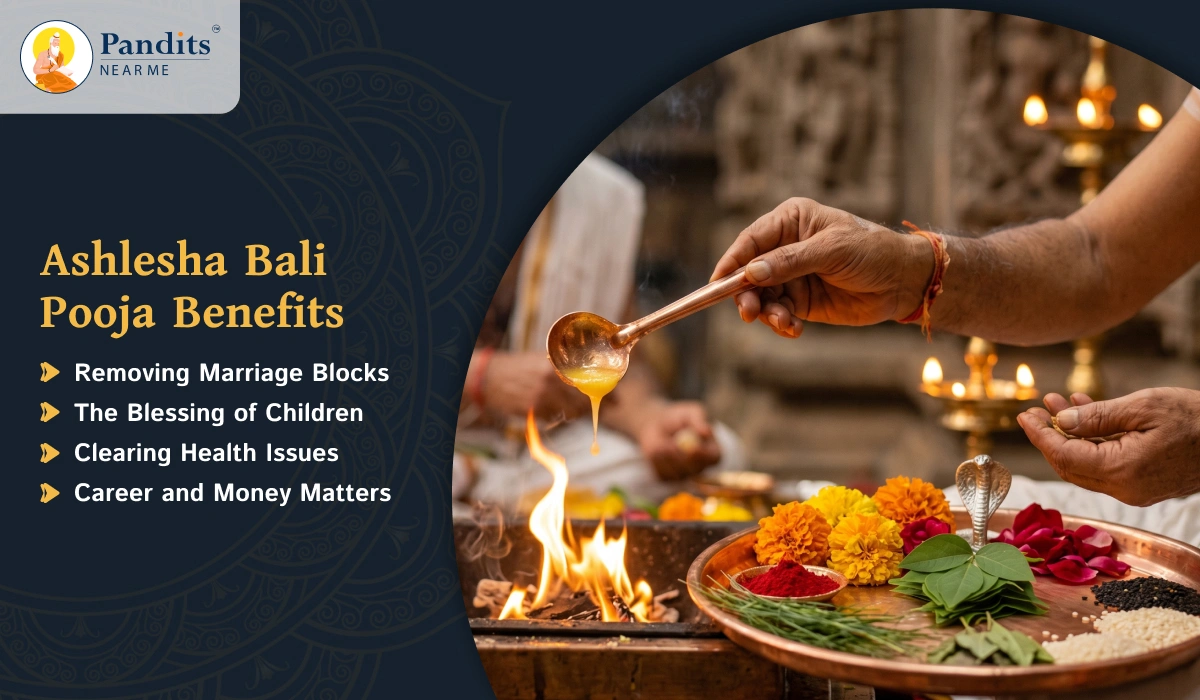
The Ashlesha Bali Pooja benefits cover almost all major areas of life: Most people choose to perform Ashlesha Bali Pooja when they feel that their hard work alone is not yielding results.
1. Removing Marriage Blocks
Many people suffer from Mangalya Dosha, which typically results in significant delays finding a partner and ongoing difficulties in marriages. Performing Ashlesha Bali Pooja is thought to alleviate these issues and aid people in finding the right partner for marriage.
2. The Blessing of Children
Many families are concerned with Putra Dosha (represents difficulty conceiving children). One of the main reasons people come to Kukke is to pray for their child. It is thought that when the Nagas are happy, they will provide a long-lasting healthy family.
3. Clearing Health Issues
There is a strong traditional link between the Nagas and skin health. People suffering from chronic skin allergies, rashes, or even long-term illnesses that don't respond well to medicine often perform this pooja as a spiritual remedy.
4. Career and Money Matters
If you feel that your career has hit a plateau or you are facing constant financial losses, it might be due to "Kaal Sarp Dosha." Performing the Bali helps "open up" your luck, leading to better opportunities and stability.
Why is Kukke So Special?
The Kukke Subramanya Ashlesha Bali Pooja is a Hindu religious service performed at the "Kukke Subramanya Temple" to achieve spiritual benefits. This temple has an interesting legend associated with it - it was created because of a mythical snake king named Vasuki, who fled from Garuda (the eagle god). The son of God Shiva was Subrahmanya he promised that he would protect all snakes and Vasuki at this site again because he was in need of protection.
Therefore, when someone prays to Kukke Subramanya for a "Sarpa Dosha" (an unfortunate combination of factors/bad luck caused by Snakes/curses), their prayers will reach him at a much higher level than if they were to pray elsewhere.
Comparing the Options: The Kukke Subramanya Pooja List
When you visit the temple, you’ll see many different rituals. It helps to know where Ashlesha Bali fits in. Below you will find the Kukke Subramanya Pooja list:
| Feature | Ashlesha Bali Pooja | Sarpa Samskara | Nagaprathishta |
| Time Commitment | 4–5 Hours (One day) | 2 Full Days | 2–3 Hours |
| Main Goal | General Peace & Health | Removing the sin of killing a snake | Fixing a "broken" lineage |
| Best For | Routine Doshas | Deep-seated family curses | Strengthening the birth star |
| Frequency | Once a month (on Ashlesha) | Specific dates | Any auspicious day |
A Walkthrough of the Ritual Procedure
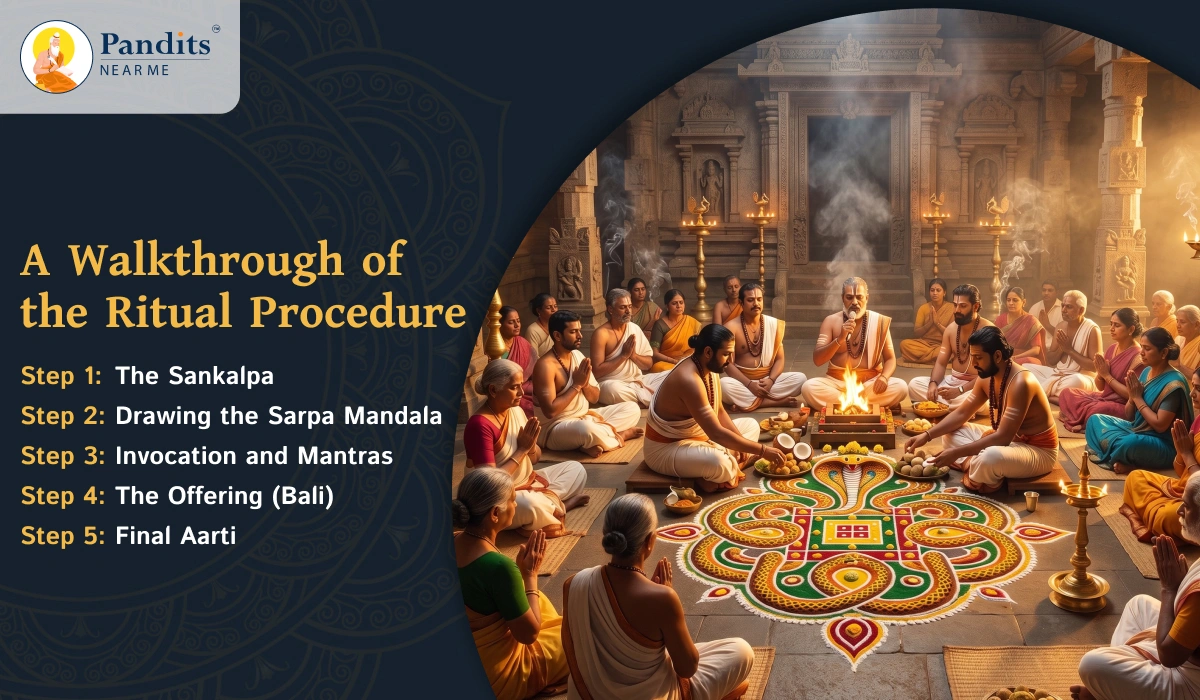
The ashlesha bali pooja is beautiful to watch, but it requires patience. It isn't a quick prayer; it’s a detailed process.
Step 1: The Sankalpa
This is the most important part for you personally. You will sit with the pandit and give your name, birth star, and family lineage (Gotra). You tell the Divine exactly why you are there – whether it's for your health, your children, or your job. This "assigns" the benefits of the pooja to you.
Step 2: Drawing the Sarpa Mandala
The pandit use five different natural powders (usually white, red, yellow, green, and black) to draw a large, intricate circular design on the floor. This is the "Mandala." It represents the cosmic home of 48 different serpent deities.
Step 3: Invocation and Mantras
The pandit chant powerful Vedic hymns to invite the Naga deities into the Mandala. The atmosphere in the hall becomes very quiet and focused during this time.
Step 4: The Offering (Bali)
This is where the pooja gets its name. "Bali" refers to small balls of cooked rice mixed with turmeric, curd, and ghee. These are placed on the Mandala while specific names of the Nagas are called out. It’s a way of "feeding" and satisfying these energies.
Step 5: Final Aarti
The ritual ends with a grand flame (Aarti) shown to the Mandala and the main deity. You then receive the Prasadam, which marks the completion of your offering.
Living the Sattvic Life: Rules to Follow
You cannot enter into the temple and perform the pooja without being prepared to perform it; there are certain rules you have to follow to ensure that you are mentally and physically prepared to perform a pooja, which are as follows:
● Food Rule: You must be a strict vegetarian for at least 3 days before and after the pooja. In fact, many people avoid "tamasic" food like onions, garlic, and heavy spices to keep their energy level low.
● Dress Code: There are strict dress codes in South Indian temples. Men usually wear a dhoti (in some temple areas they will have to remove their shirts), women wear sarees or traditional suits.
● Post-Pooja Behavior: After the pooja, it is customary for you to go direct home after the pooja. You should not go to a friend's house, you should not go shopping on your way home, and you should not visit another temple on your way home so that you can carry the energy of the pooja home with you.
● Kindness to Snakes: After the pooja, you should not kill any animal, especially a snake, and you should avoid looking at a dead snake.
Planning Your Trip to Kukke Subramanya
If you’ve decided to attend,the Kukke Subramanya ashlesha bali pooja remember that it is very highly demanded, so you will not just be able to walk in and buy a ticket for the Ashlesha Nakshatra on that day.
Online Bookings: Ticket resources will become available several months in advance via the temple’s official website, but often sell out within hours.
Accommodations: It may be advantageous if you stay at the guest houses that the temple operates, since they are located close to the rooms where the diety will be worshipped.
Crowds: It can be anticipated that the town will be very busy on Ashlesha Nakshatra dates and is likely to have long wait times and extensive walking distances.
Conclusion
The Ashlesha Bali Pooja serves as an affirmation of both faith and humility being two key ingredients in living a worthy life; it should also remind us that we are all part of something far greater than ourselves — and everything that we do (good or bad) has consequences.
The Ashlesha Bali Pooja gives you opportunity to give back through your own actions, while also helping to cleanse your mind/body and create positive energy for yourself.
Any way you look at it (be it seeking a miracle or simply having an honest heart), participating in the Ashlesha Bali Pooja will provide value to you.
Book your Ashlesha Bali Pooja with trusted, verified pandits through Pandits Near Me and experience a seamless, spiritually guided ritual journey.